Recently, I read a short but interesting book called “The Gentle Art of Swedish Death Cleaning” by Margareta Magnusson. Amy Poehler of Saturday Night Live and Parks and Recreation fame has also done a TV series on it that runs on the Peacock Network.
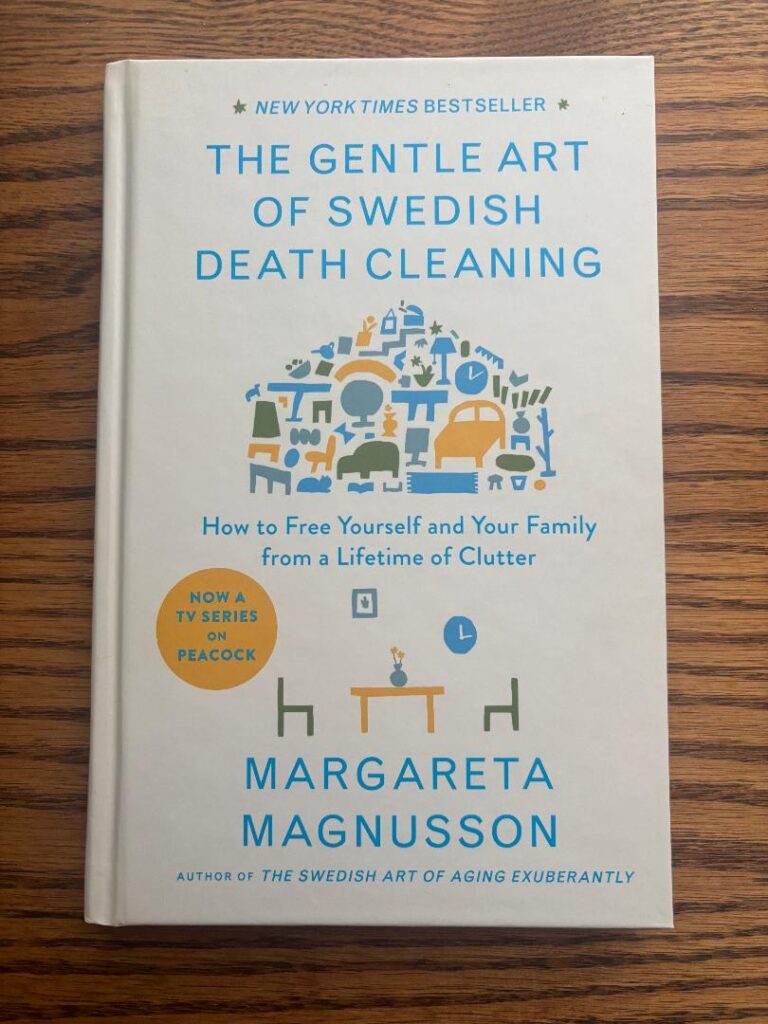
But what is Swedish Death Cleaning? According to the book: “In Swedish it is a term that means you remove unnecessary things and make your home nice and orderly when you think the time is coming closer for you to leave the planet.” It’s a method of organizing and decluttering your home to lesson the burden on your loved ones after you’ve passed away.
One of the suggestions in the book is to keep the items that are personally meaningful because of the happy moments attached to them. If certain items are special to you, set them out to enjoy or frame them and hang them on the wall. Get those special items out if seeing them brings you joy! This would include things like antiques, collections, gifts from friends and family, awards and honors, and special photos.
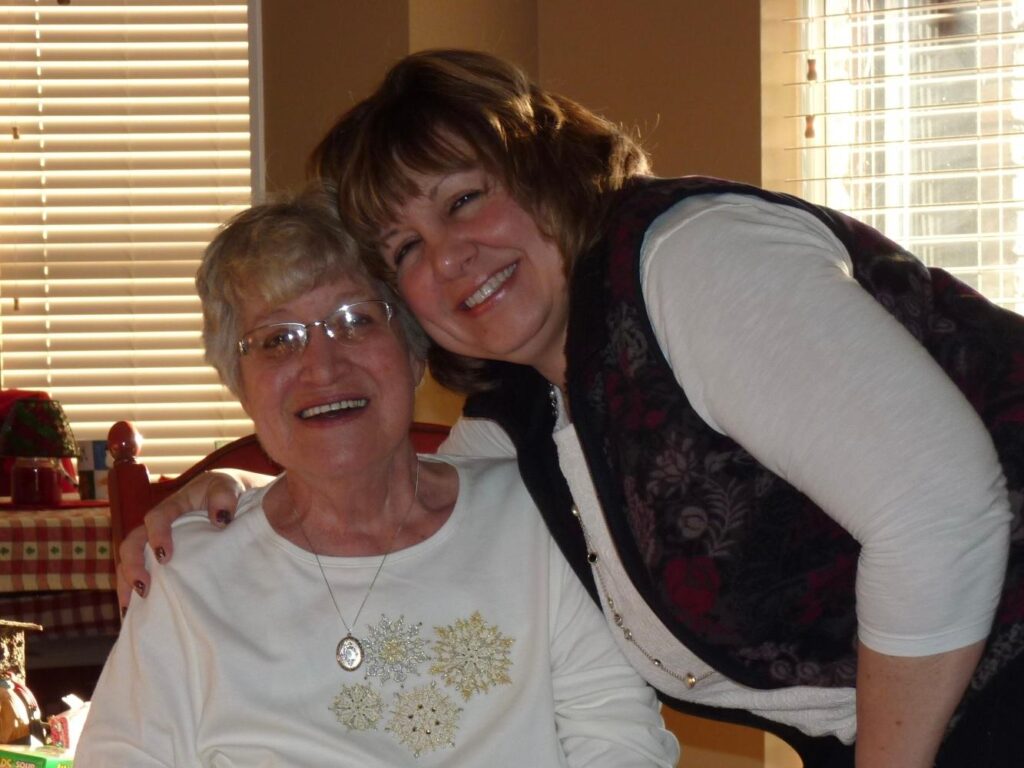
While my parents were still living in their home, I encouraged them to do some of this…without success. They simply were not interested in getting rid of any of their belongings. After hauling boxes in from the garage a couple of times for them to go through and being told they wanted all of it, I gave up.
I wish I had known about this gentle art a couple of years later when I WAS clearing out my parents’ house in Texas. I could have used the tips about how to approach the entire project. It was emotional because there were so many memories attached to the items in their home. I went through their belongings in one room at a time. I started in the rooms with less “stuff” and left the kitchen for last.

For those who are going through family members’ homes after they have passed, the book suggests breaking everything into categories and going through one category at a time…books, dishes, jewelry, furniture, clothes, linens, collections, tools, photos. I see the wisdom in organizing items that way.
Some things can be sold or donated, others might need to be trashed, and family members may want to keep some items. The author suggests leaving things like photos and old letters for last because it’s easy to get bogged down by emotions when you go through sentimental items.
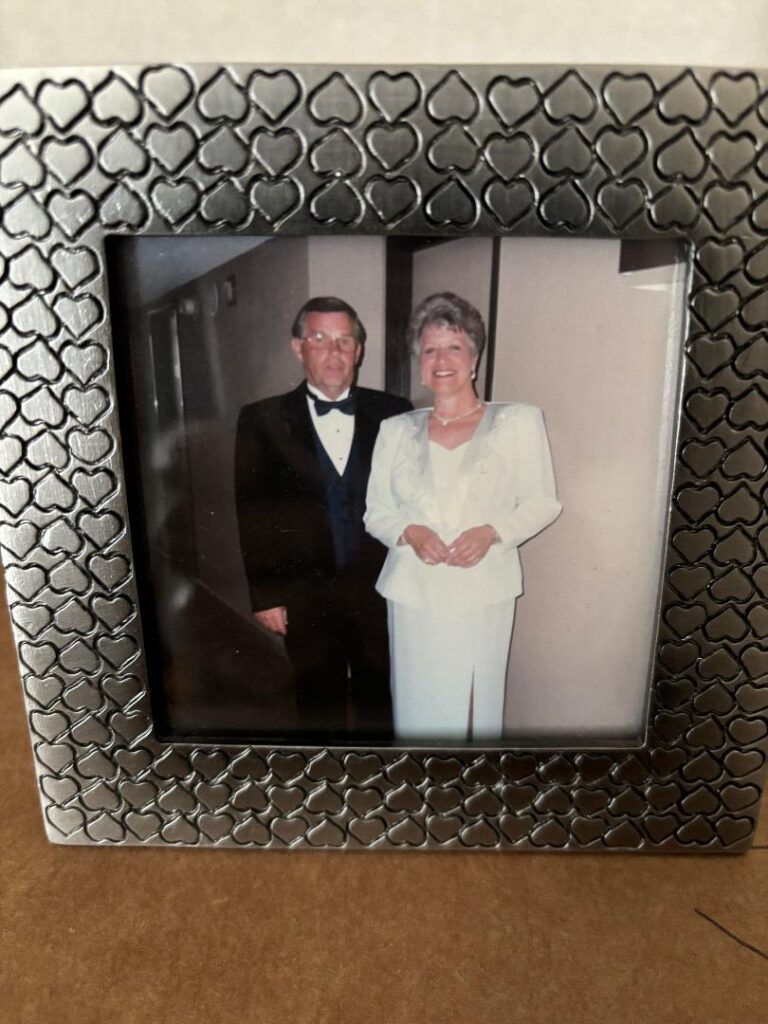
I did attempt to go through photos one day but found it to be too time consuming and too difficult emotionally. I ended up leaving the photos to last and even moved one box with me to Indiana last year. It’s still downstairs in the basement waiting for me to get to it.
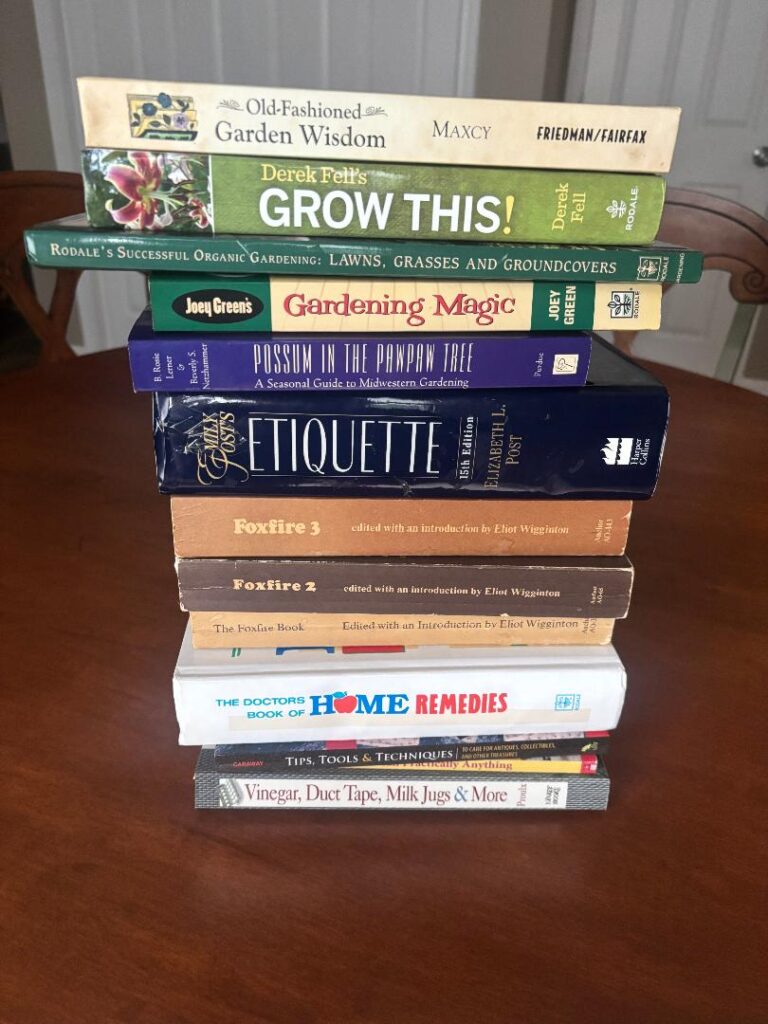
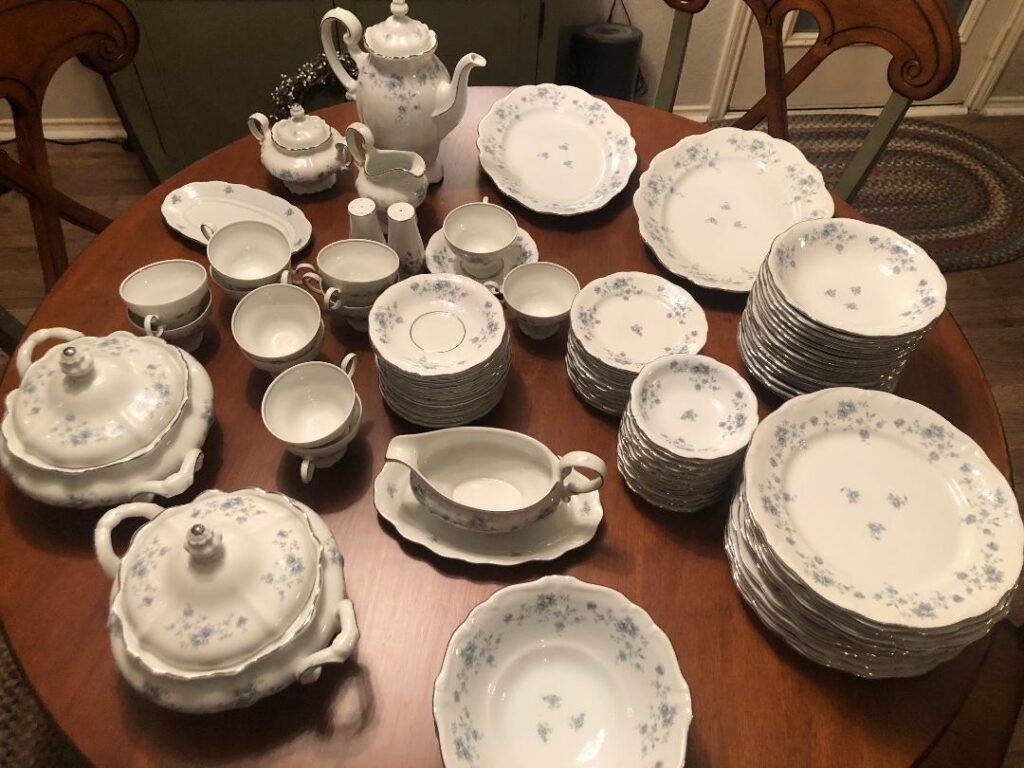
I kept many of my mom’s books because a love of books was one of the many things we had in common. In hindsight, I wish I had kept more of them, but I was worried about having enough space. Besides being an avid gardener, I found that my mom was ahead of her time in learning different ways to recycycle and upcycle. I suspect she might have been a bit of a prepper too!I kept her wonderful, handwritten recipes and some of her cookbooks. I kept her pretty laundry basket. I kept her Bible. I also kept some of her dishes, especially the ones that she used during the holidays.
For me, the real jewels in my mother’s belongings were the many notebooks she kept of her writing. She wrote essays, family history, stories, poetry, garden plans and to do lists. It’s comforting for me to see her handwriting and to read her words. Sometimes, I can almost hear her saying them.
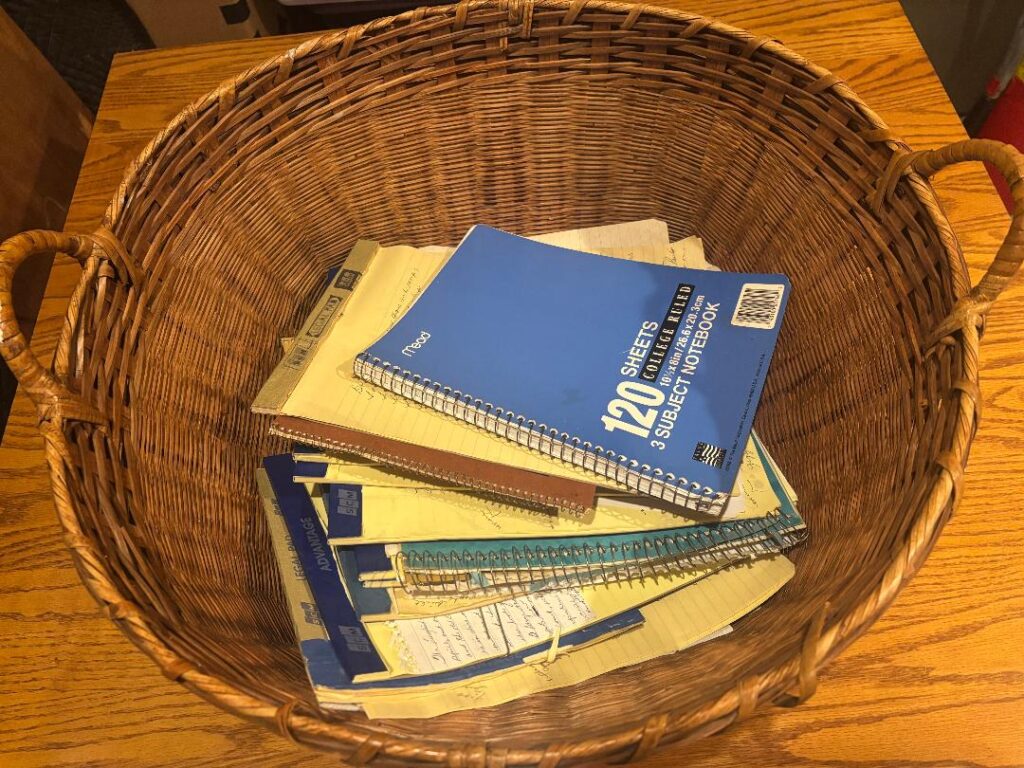
Until I went through my parents’ house, I didn’t realize what a prolific writer my mother was. I thought I was the first writer in the family. Evidently not. Her writing is a treasure trove for me. I haven’t been able to dive too deeply into the stack of notebooks but it’s something I hope to do very soon.
One of my key takeaways from “The Gentle Art of Swedish Death Cleaning” is that this type of cleaning can be done any time and at any age. I imagine we all have too much stuff and can probably use a little Swedish death cleaning!