Posted on 1 Comment

Do The Things You Are Most Afraid Of Doing

Two years ago today, I was co-teaching a two-day class on how to write and publish a book at the University of North Texas in Denton, Texas. It was through the Osher Lifelong Learning Institute (OLLI) at UNT Program. This is a program that offers non-credit courses and educational events for adults aged 50 and older. The goal of this program is to foster intellectual stimulation and social engagement for older adults through courses and events. Courses are presented by active and retired faculty as well as by area professionals. I fell into the “area professional” category.
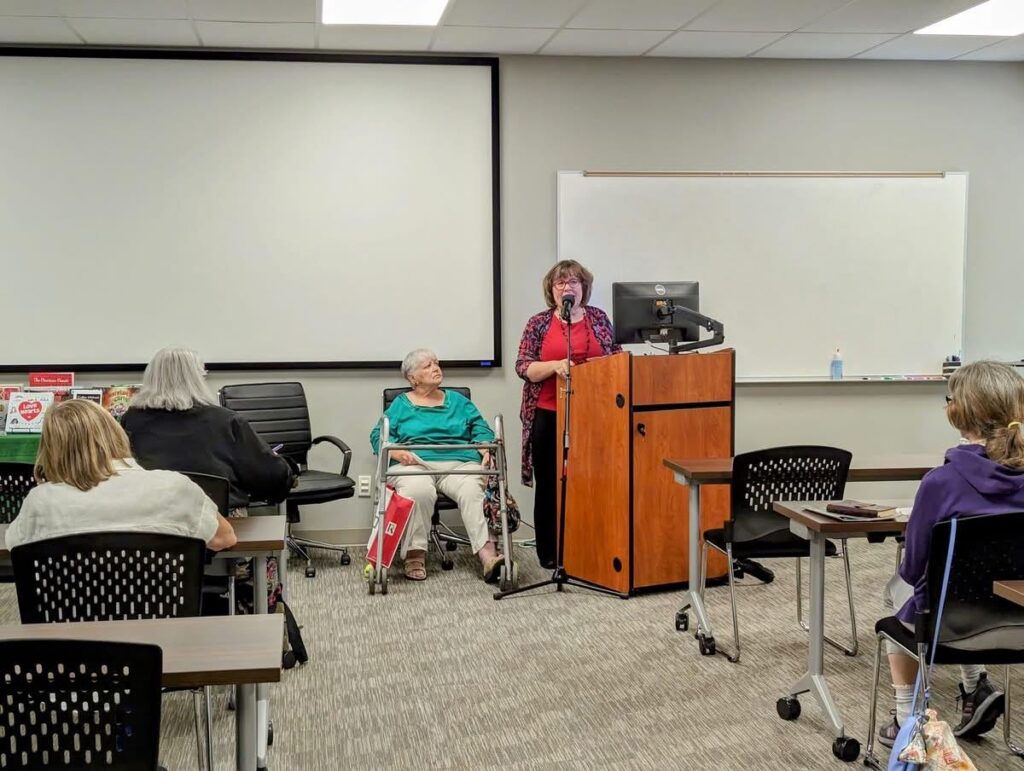
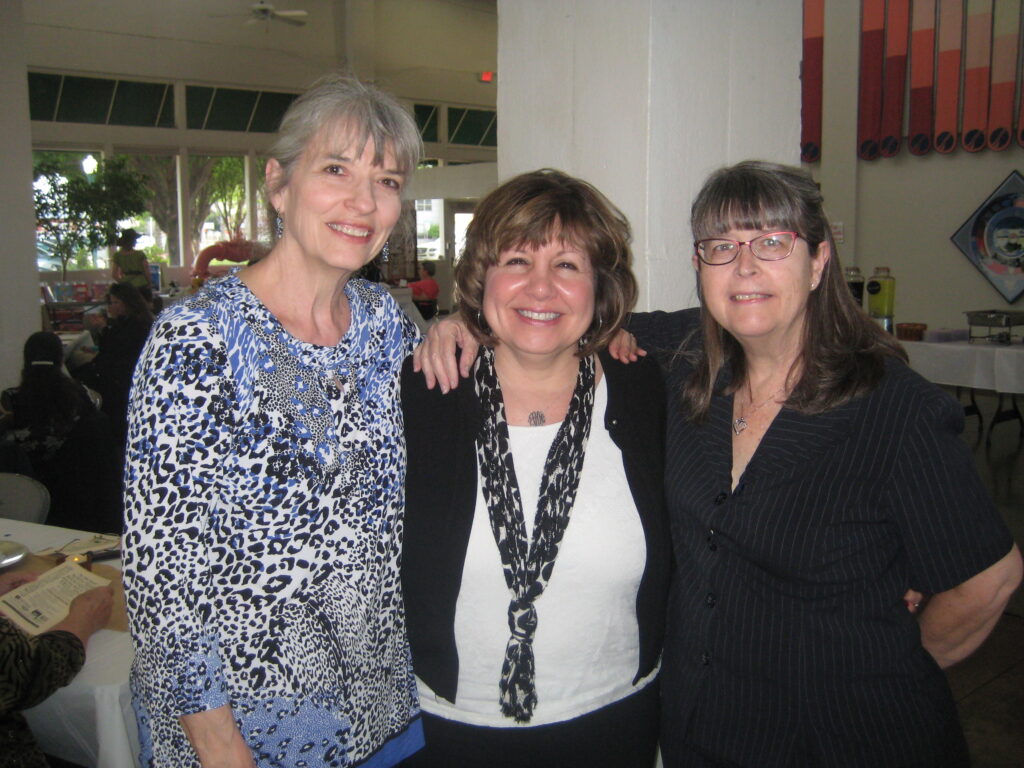
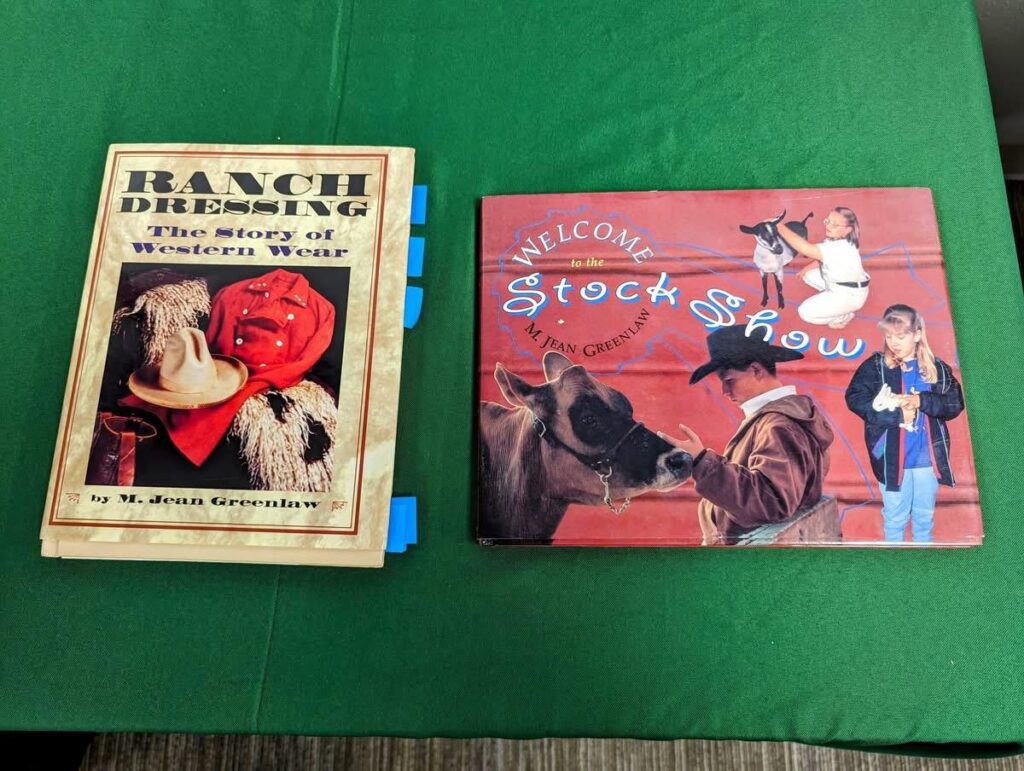
My class co-instructor was Dr. Jean Greenlaw who is Regents Professor Emeritus at the University of North Texas where she taught for 27 years. Jean is the author of two traditionally published books, and she also writes a column called “Book Talk” for the local newspaper, the Denton Record Chronicle.
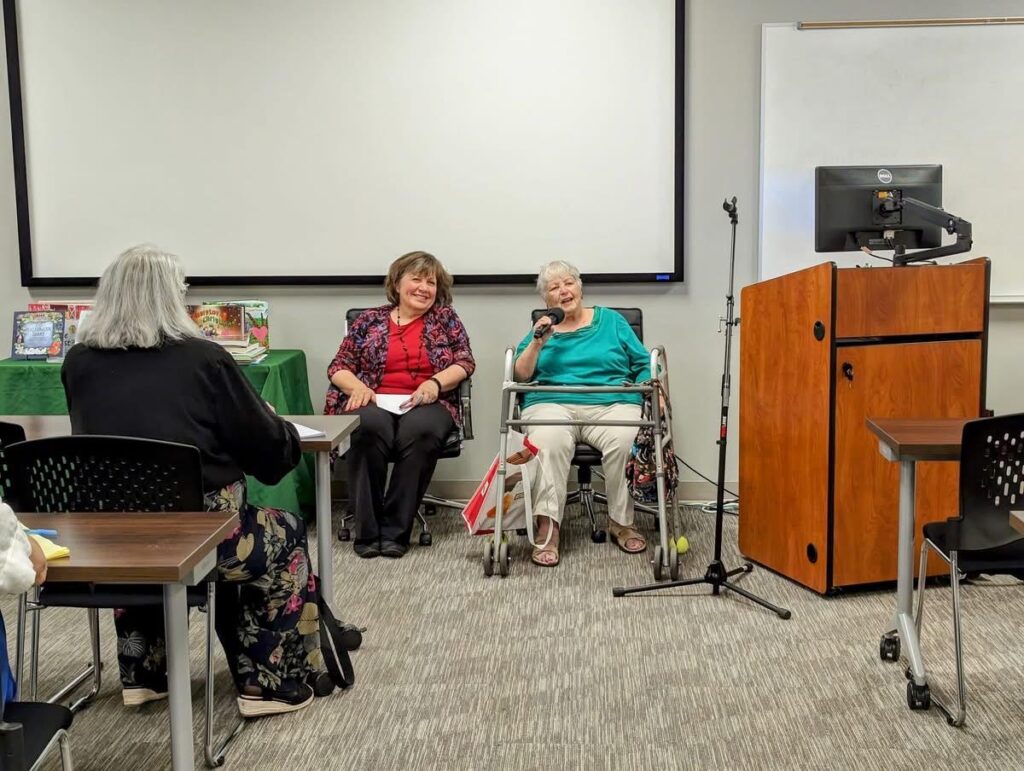
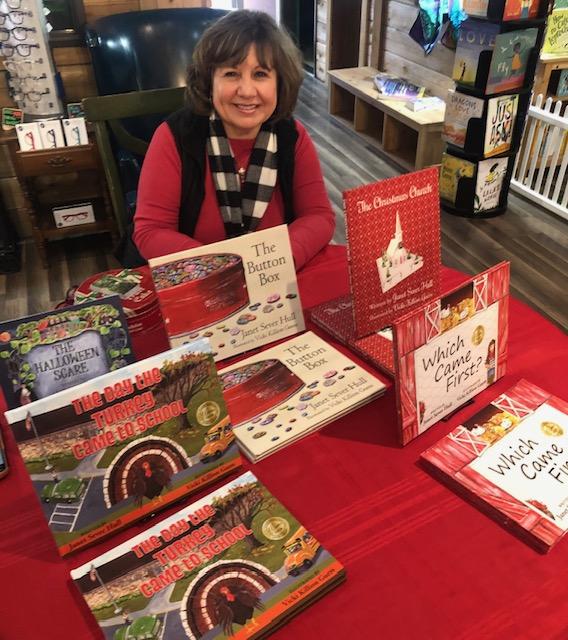
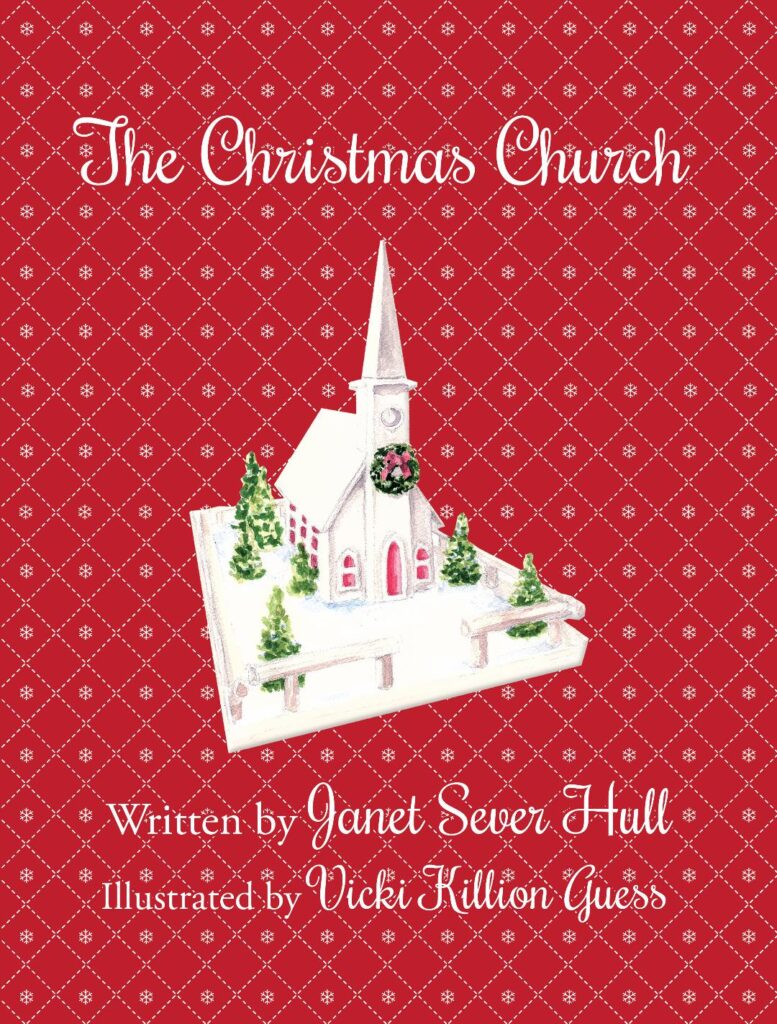
I met Jean when she came to one of my book signings at Patchouli Joe’s Bookstore in Denton. She is a fan of books and authors, and she was looking for books for her grandchildren as well as books to potentially feature in her column. (She later featured my book, “The Christmas Church” in her 2023 holiday column.)
We struck up a friendship and I invited Jean to be a featured speaker for the independent living retirement community I managed. She was an interesting and engaging speaker and oh so knowledgeable. A short time later we had lunch together and she asked if I would be interested in co-teaching a course with her on publishing. At first, I thought she was joking. I said, “Jean, I’ve never taught before. I’m not a teacher.” She said something like, but you are knowledgeable about self-publishing, and I am knowledgeable about traditional publishing. Together we could present a really good course on publishing.

Even though I felt l was very knowledgeable about self-publishing, the thought of getting up in front of a class and talking about it terrified me. I told Jean I would think it over and get back to her. I prayed about it. I’ve always heard you should do the things you are most afraid of doing so ultimately, I said “yes”.
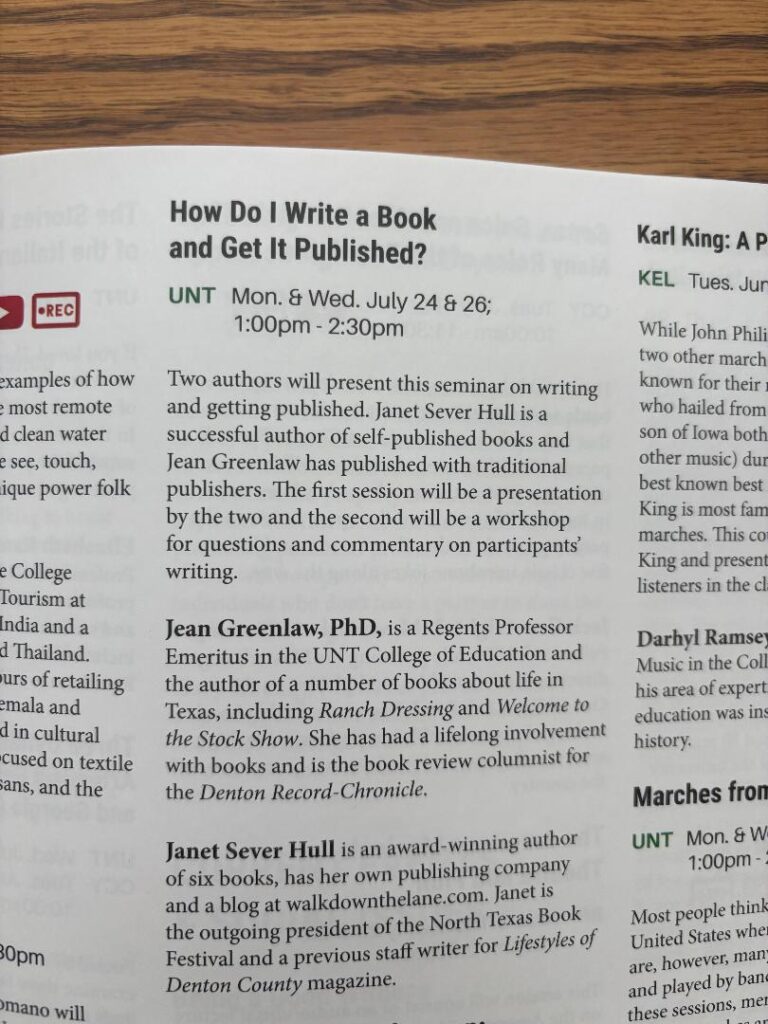
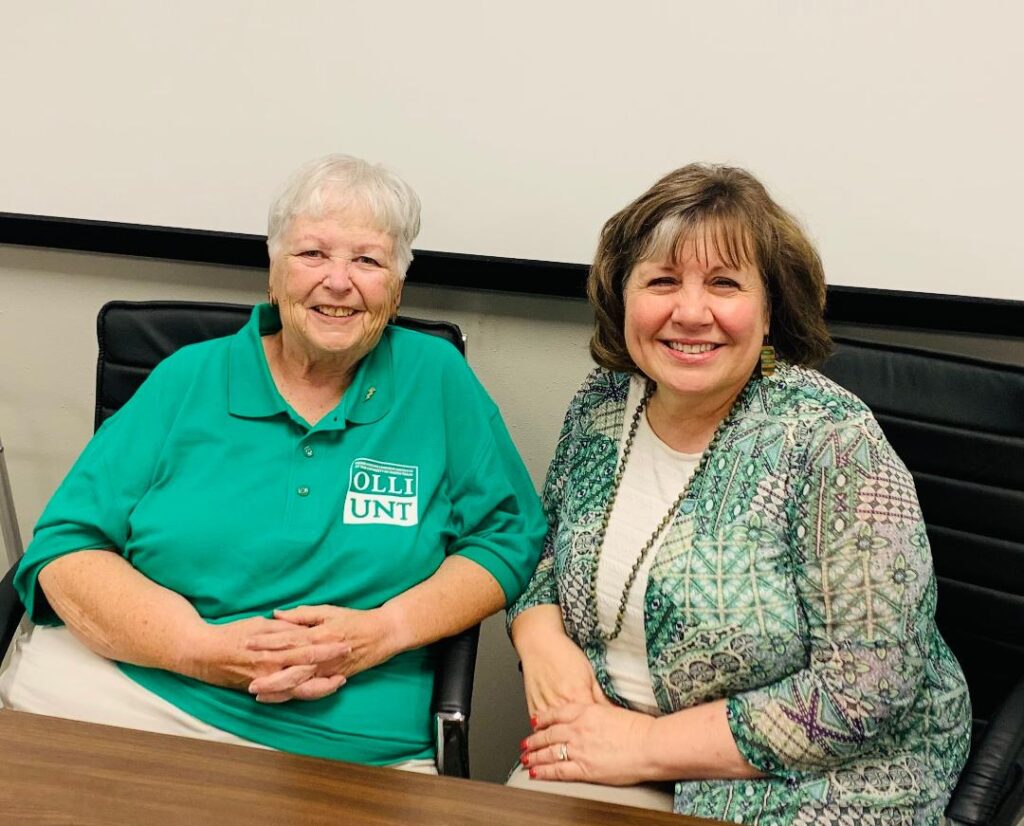
Of course, It turned out to be a great and fun experience. The class attendees were interested and engaged in the subject and asked so many great questions. I met people in the class that I am still in touch with today and some of them became Facebook friends. I also have even more respect for teachers than I did before.

For those of you who are interested, here are some pros and cons of both self-publishing and traditional publishing:

Pros of Self-Publishing:

*It’s guaranteed that your book will get published.

*Your book can get to the market on your timeline.

*You have total creative control, and you can try innovative new ideas.

*Royalties (the amount you make less the costs) are generally over 50%.

Cons of Self-Publishing:

*You do all the writing, editing, design and marketing yourself or you hire someone to do it for you.

*You pay all the costs of publishing your book.

*If you mass print, you must ship your books to physical stores. (You can also print and ship on demand.)

Pros of Traditional Publishing:

*You have the backing of an editorial, design, and marketing team.

*Production costs are paid by the publisher instead of by the author.

*There is a certain prestige that comes with being traditionally published.

*Depending on your book, there might be an advance given to you from the publisher. Author royalties are generally 10-30%.

Cons of Traditional Publishing:

*Your book might never get published or might take a long time.

*The publisher makes most of the royalties.

*You do not have creative control…the publisher has the final say on how your book will look…and you might not like the final result.

Posted on

Swedish Death Cleaning

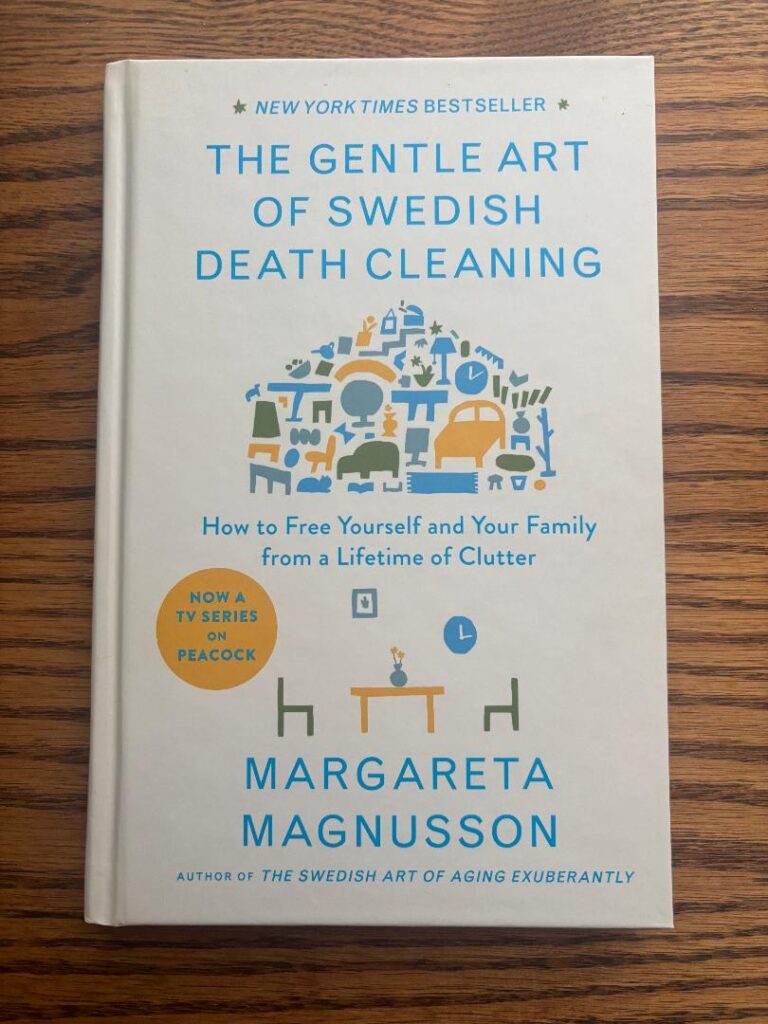
Recently, I read a short but interesting book called “The Gentle Art of Swedish Death Cleaning” by Margareta Magnusson. Amy Poehler of Saturday Night Live and Parks and Recreation fame has also done a TV series on it that runs on the Peacock Network.

But what is Swedish Death Cleaning? According to the book: “In Swedish it is a term that means you remove unnecessary things and make your home nice and orderly when you think the time is coming closer for you to leave the planet.” It’s a method of organizing and decluttering your home to lesson the burden on your loved ones after you’ve passed away.

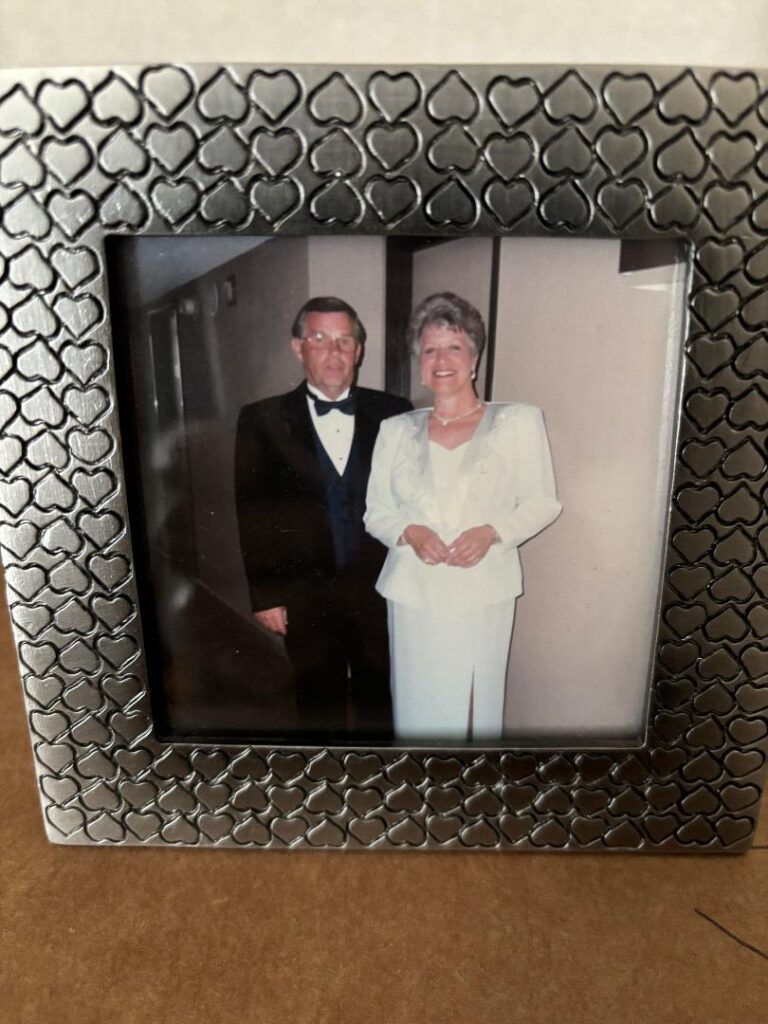
One of the suggestions in the book is to keep the items that are personally meaningful because of the happy moments attached to them.  If certain items are special to you, set them out to enjoy or frame them and hang them on the wall. Get those special items out if seeing them brings you joy! This would include things like antiques, collections, gifts from friends and family, awards and honors, and special photos.

While my parents were still living in their home, I encouraged them to do some of this…without success. They simply were not interested in getting rid of any of their belongings. After hauling boxes in from the garage a couple of times for them to go through and being told they wanted all of it, I gave up.

I wish I had known about this gentle art a couple of years later when I WAS clearing out my parents’ house in Texas. I could have used the tips about how to approach the entire project. It was emotional because there were so many memories attached to the items in their home. I went through their belongings in one room at a time. I started in the rooms with less “stuff” and left the kitchen for last.
For those who are going through family members’ homes after they have passed, the book suggests breaking everything into categories and going through one category at a time…books, dishes, jewelry, furniture, clothes, linens, collections, tools, photos. I see the wisdom in organizing items that way.

Some things can be sold or donated, others might need to be trashed, and family members may want to keep some items. The author suggests leaving things like photos and old letters for last because it’s easy to get bogged down by emotions when you go through sentimental items.

I did attempt to go through photos one day but found it to be too time consuming and too difficult emotionally. I ended up leaving the photos to last and even moved one box with me to Indiana last year. It’s still downstairs in the basement waiting for me to get to it.

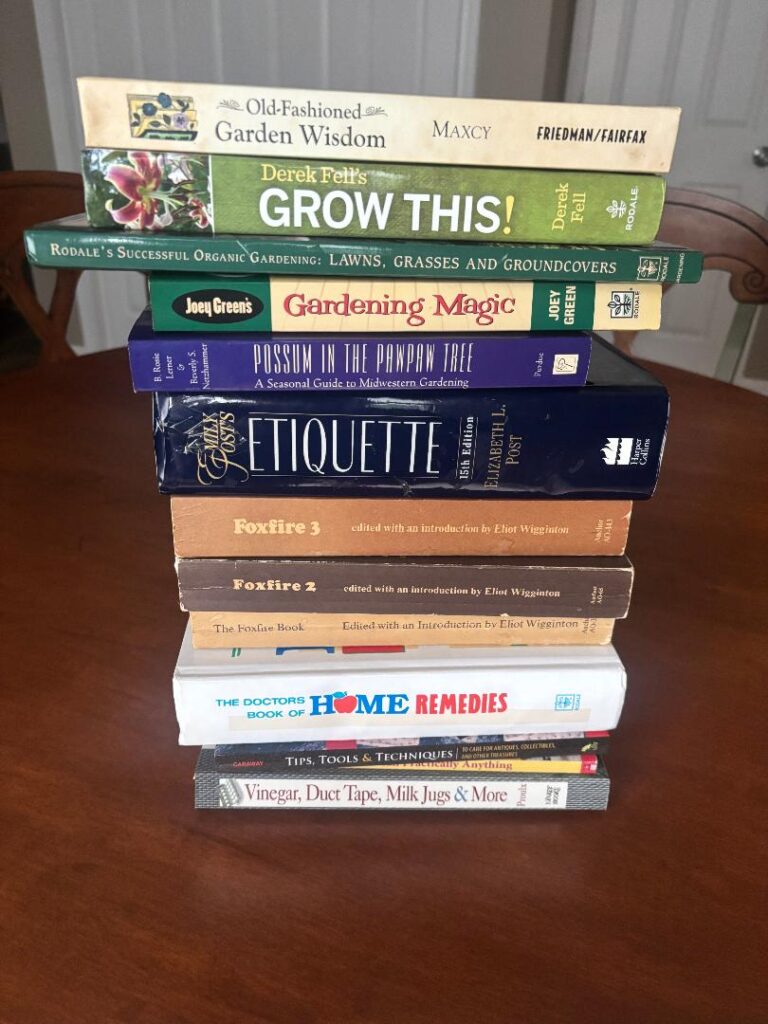
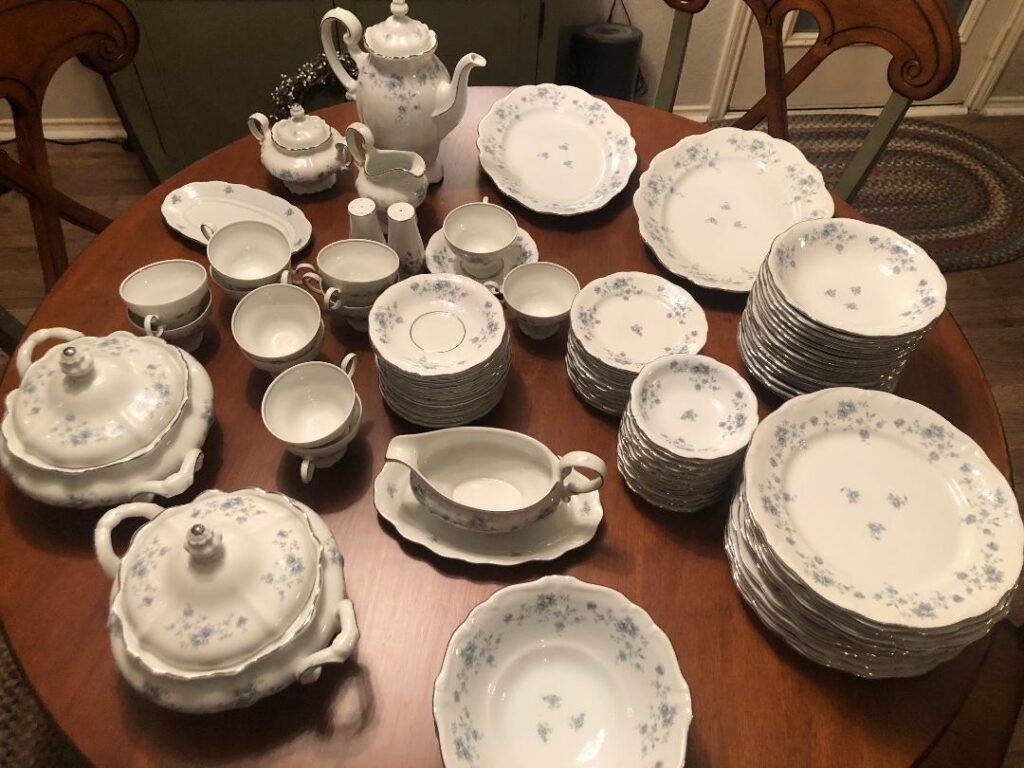
I kept many of my mom’s books because a love of books was one of the many things we had in common. In hindsight, I wish I had kept more of them, but I was worried about having enough space. Besides being an avid gardener, I found that my mom was ahead of her time in learning different ways to recycycle and upcycle. I suspect she might have been a bit of a prepper too!I kept her wonderful, handwritten recipes and some of her cookbooks. I kept her pretty laundry basket. I kept her Bible. I also kept some of her dishes, especially the ones that she used during the holidays.

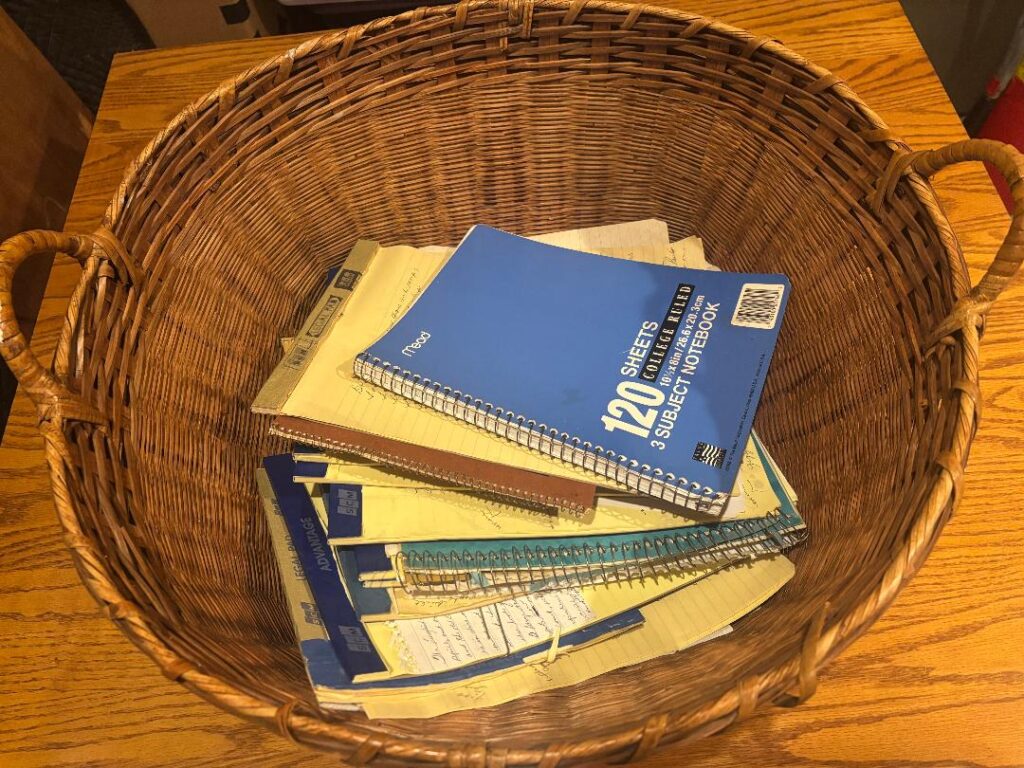
For me, the real jewels in my mother’s belongings were the many notebooks she kept of her writing. She wrote essays, family history, stories, poetry, garden plans and to do lists. It’s comforting for me to see her handwriting and to read her words. Sometimes, I can almost hear her saying them.

Until I went through my parents’ house, I didn’t realize what a prolific writer my mother was. I thought I was the first writer in the family. Evidently not. Her writing is a treasure trove for me. I haven’t been able to dive too deeply into the stack of notebooks but it’s something I hope to do very soon.

One of my key takeaways from “The Gentle Art of Swedish Death Cleaning” is that this type of cleaning can be done any time and at any age. I imagine we all have too much stuff and can probably use a little Swedish death cleaning!

Posted on

Halfway Through 2025

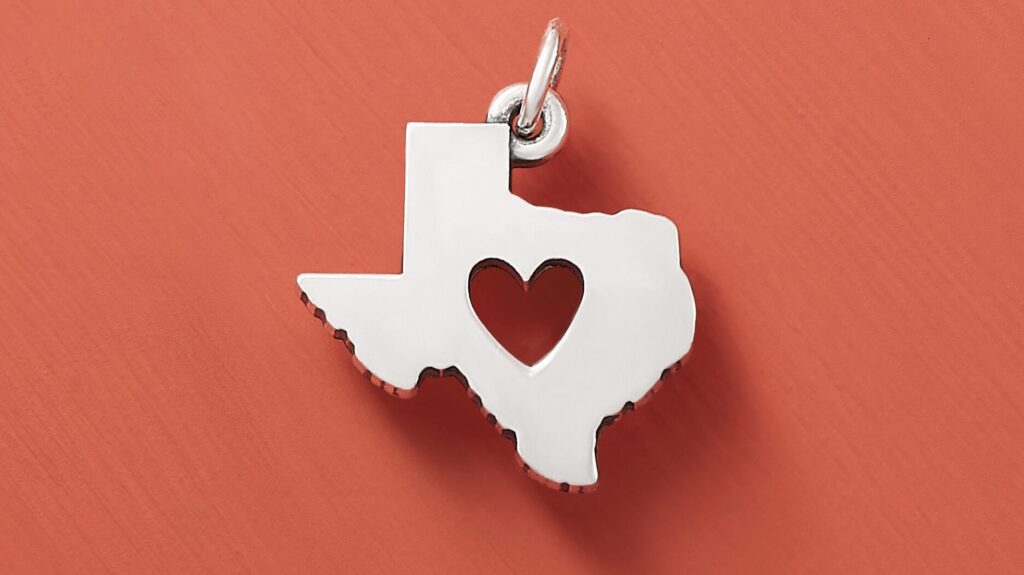
I wrote this blog post yesterday but honestly, it feels very insignificant to me in light of all that is happening in our country right now with people losing their homes and family members to floods and fires. I am especially heartbroken by the recent flooding in Kerrville, Texas which has taken the lives of so many. As a lot of you know, I lived in Texas for 14 years before moving back to the Midwest last year. Texas and Texans will always hold a special place in my heart. My brother, Brian, still lives in Austin, about an hour from all the flooding. Thank you to all the first responders who are working so hard to help the people of Texas!

Can you believe we are halfway through 2025? We are actually more than halfway because the halfway point was July 2nd. Like many people, I enjoy setting goals or making resolutions each January and I made a few at the beginning of this year.

Since we’ve reached the midpoint in the year, I thought it might be a great opportunity to evaluate my progress and see how I’m doing.  Why is this important? I think a mid-year review helps us to see how we’re doing and where we stand with regard to our original goals set in January. Were they realistic? If we need to, we can make adjustments to our goals or even release them if they aren’t working for us.

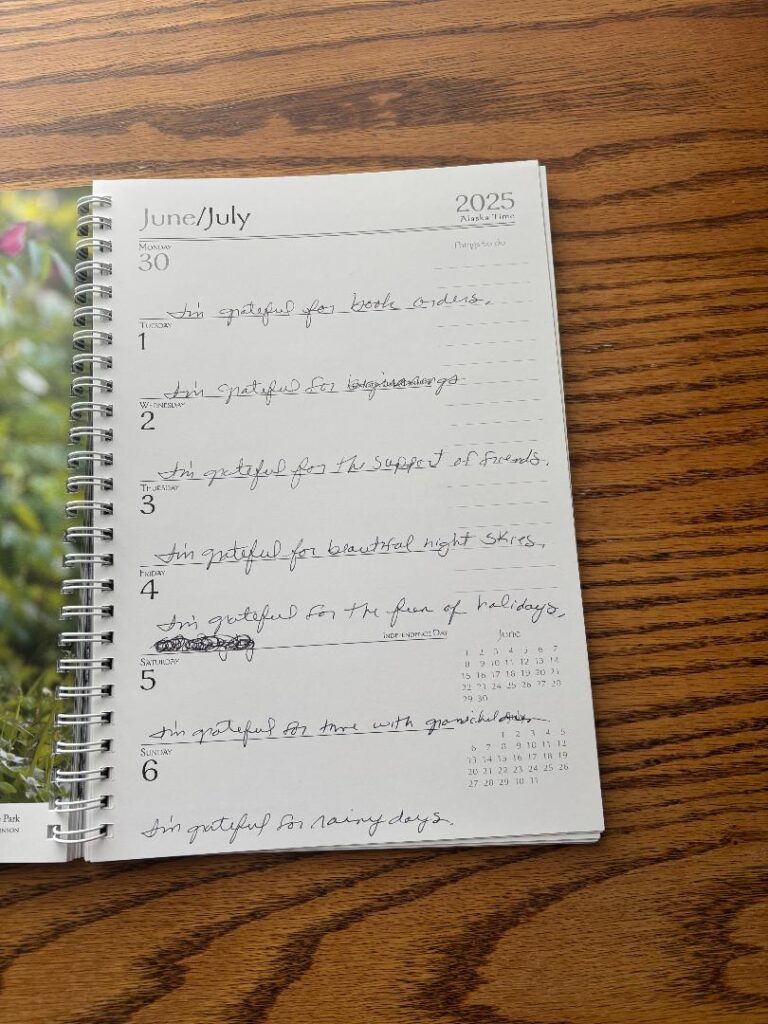
Besides being more active, which seems to be one of my goals every year, my other goals revolved around writing new material and learning to do a better job marketing my books. I also made a resolution to keep a daily gratitude journal and to have a grateful attitude each day.

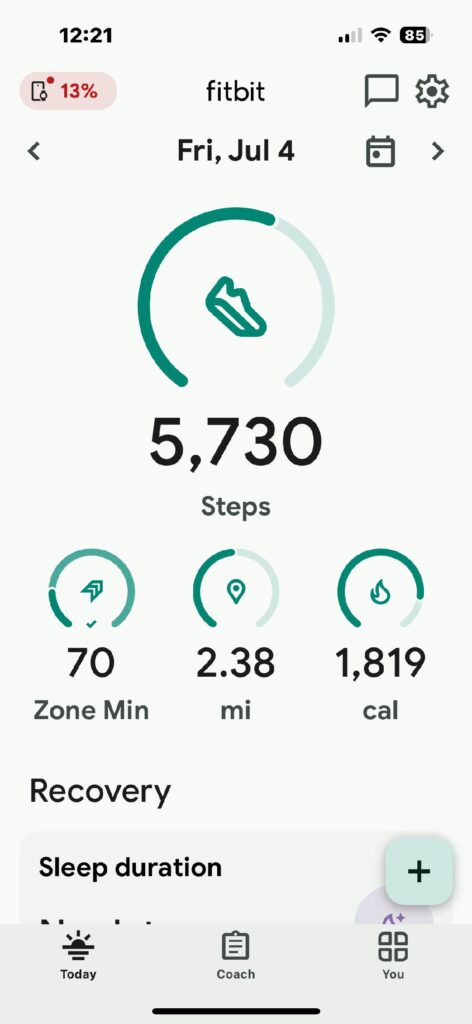
So far, I think I’m doing fairly well. I found my Fitbit and started wearing it again and I’ve more than doubled my daily steps each day. I don’t know who came up with the 10,000-step goal but I’m not there yet! I do enjoy swimming in the summer so that also helps me be more active.

I’ve really enjoyed keeping a gratitude journal. I keep it simple and write one sentence about something I’m grateful for each day. I know, you would think a journal would be longer, but this is what works to keep me in a grateful frame of mind. I think about what I’m grateful for each morning during my coffee and prayer time.

The older I get, the more I understand the value of keeping my goals manageable. I read the book “Atomic Habits” by James Clear a couple of months ago, and one of the key takeaways for me was to start with small, attainable goals rather than big goals that would overwhelm me and set me up for failure.

In February, I began blogging weekly and that has helped me get back into a regular writing routine again after some time off. I’ve also written two new stories, and hope to publish at least one of them next year as a children’s book. I’d still like to write five mornings a week, but if I’m honest about it, I end up writing two or three mornings each week.

I have a friend who introduced me to the Reedsy courses…have you heard of them? www.reedsy.com Through this website, I have taken several book marketing and social media marketing courses. They offer both free and paid coursework on various topics that are of interest to writers and authors.

My son, Ryan Sever, author of “Cardboard Profit” has shown me how to do Meta advertising on Instagram and Facebook. Ryan taught me how to target my advertising to various groups of people who might be interested in my books rather than boring my Facebook friends with book posts all the time. The advertising usually begins the same day (after a short review process by Meta) and I’ve seen immediate results in the form of many book orders on my author website and on Amazon.  I am both delighted about and grateful for this uptick in orders!

My mid-year assessment is that I’ve done well in working toward the goals I set at the beginning of the year. I want to continue building on the progress I’ve made, especially in the areas of physical activity and new writing projects.

How are YOU doing with your progress toward your goals for 2025?

Posted on

Happy 249th Birthday America!

When my children were small, I used to take them to a small town near where we lived in Michigan to see the annual 4th of July parade.  It wasn’t on the grand scale of the National Independence Day Parade in Washington D. C., but it was a fun celebration of the real meaning of the holiday just the same. 

There were bands playing, veterans units marching, floats decorated in red, white, and blue with people throwing candy to the children, people on horses, local celebrities, and a whole lot of flag waving.  Usually Uncle Sam would make an appearance too. Because it was in a rural agricultural area, there were quite a few tractors and one of my sons renamed it “the tractor parade”.  Every year, we went to be a part of the pomp and circumstance of the day.

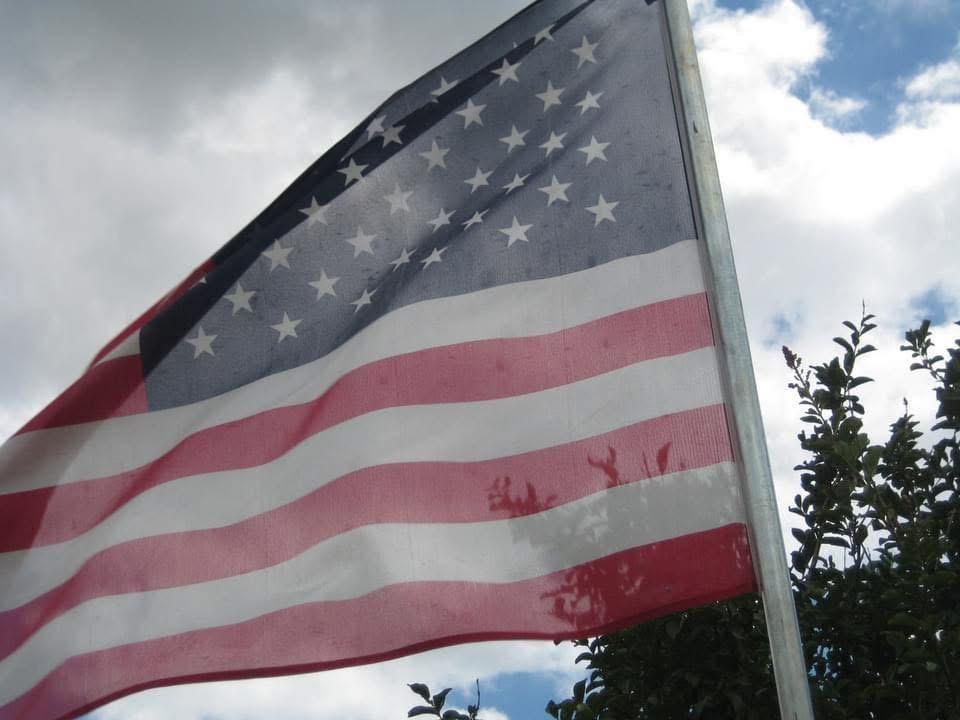
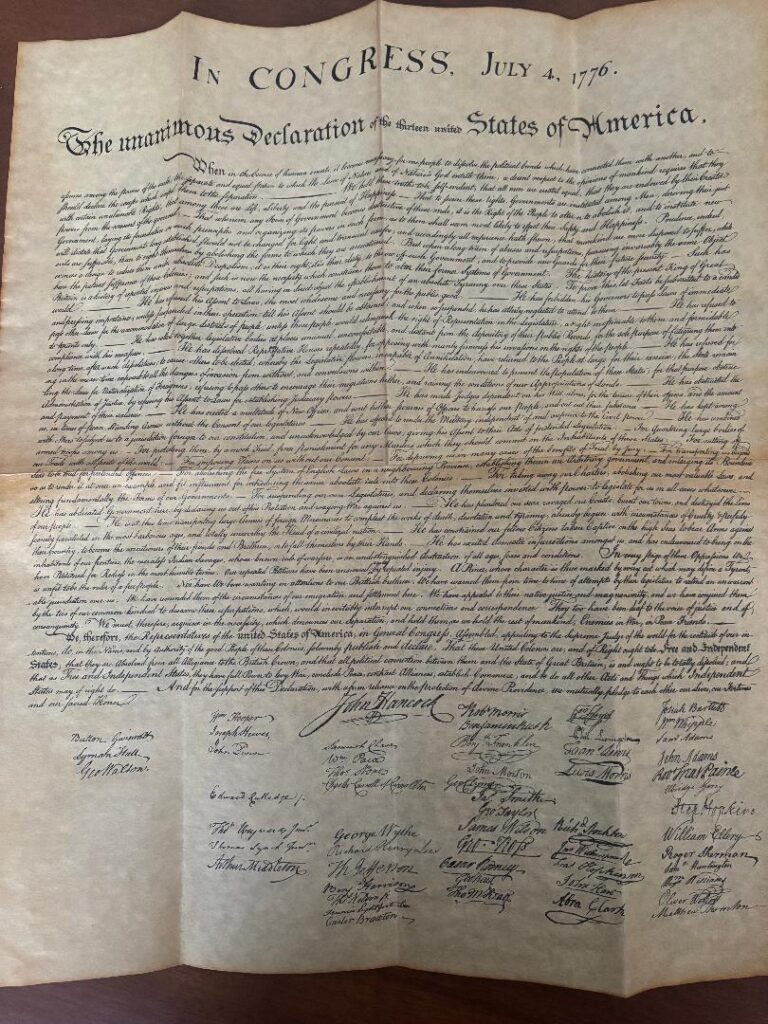
This July 4th will be our country’s 249th celebration of the birth of American independence from Great Britain…it’s our country’s birthday.  Back in 1776, there were just the 13 original colonies which numbered 2.5 million people…Delaware, Pennsylvania, New Jersey, Georgia, Connecticut, Massachusetts, Maryland, South Carolina, New Hampshire, Virginia, New York, North Carolina, and Rhode Island.

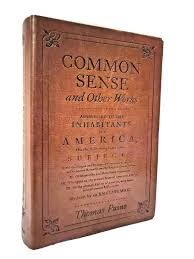
I’m proud to tell you that an American author had a great influence on the people of the colonies before our Declaration of Independence.  Thomas Paine, who was also a political activist and philosopher, wrote a little pamphlet called “Common Sense”and published it in January of 1776. 

In his best-selling 47 page pamphlet, Mr. Paine challenged the authority of the British Government and talked in plain language about the advantages and need for immediate independence.  He used Biblical references to make his case for seeking independence from British rule.  Independence from Britain was the hottest issue of the day and in addition to selling thousands of copies, “Common Sense” was read at taverns and public gatherings. 

In June of 1776, a delegate from Virginia, Richard Henry Lee, introduced a resolution calling for the independence of the 13 original colonies.  There was heated debate on the subject by the Second Continental Congress, and then a five-man committee was created to draft a formal resolution for independence from British rule.  These five men were John Adams of Massachusetts, Roger Sherman of Connecticut, Robert Livingston of New York, Benjamin Franklin of Pennsylvania and Thomas Jefferson of Virginia.  Together they created a general outline and then Thomas Jefferson wrote the the Declaration of Independence which was adopted on July 4th, 1776.

That first July celebration of independence was a bit different from the ones we have today with picnics, parades and fireworks.  Mock funerals for King George III were held to symbolize the end of the monarchy’s power over America, and colonists also celebrated with bonfires, concerts, and public readings of the Declaration of Independence.

However you celebrate with your loved ones this year, stay safe and remember that we have the freedoms we do in this country because of the vision, leadership, patriotism and sacrifice of our forefathers.

Posted on 3 Comments

Self-Publishing

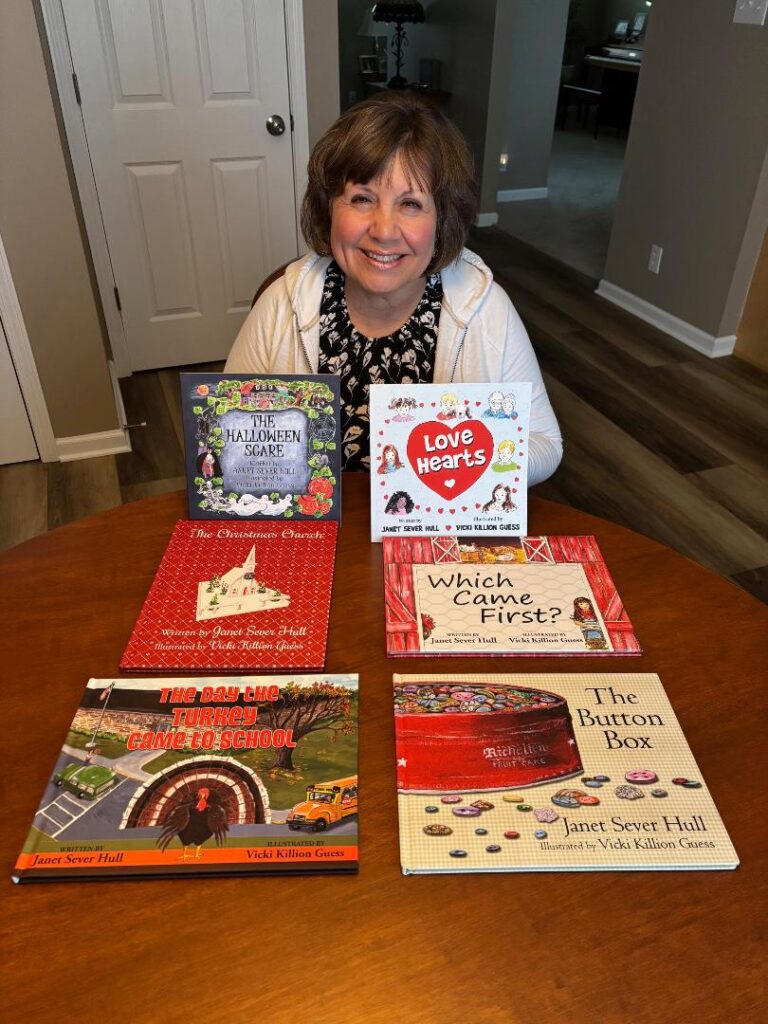
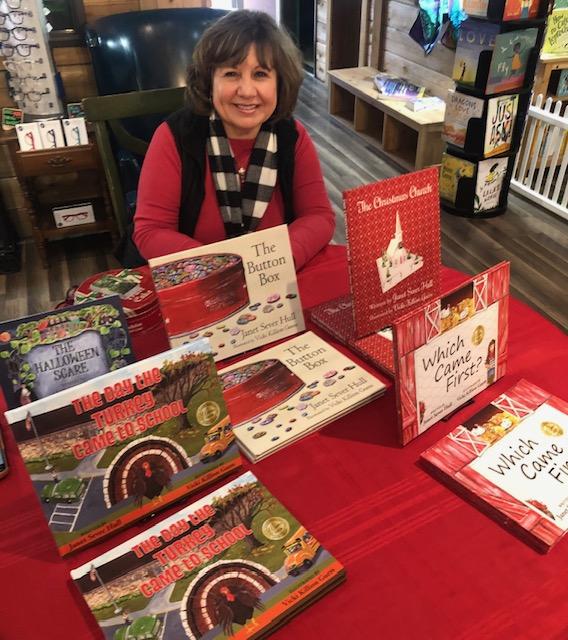
All my books are self-published. I love self-publishing, and I think my books can hold their own next to any traditionally published books. As some of you know, I had an offer from a traditional publisher for my first book, “The Button Box” but I turned it down.

I had a vision for how I wanted my book to look and that vision included the cover and the type of illustrations in the book. As I considered the contract the publisher offered me, I asked if I would have creative control over who illustrated the book and how the illustrations would look. I was told the publisher would make those decisions if I sold them my story. I turned the offer down and then they made a second, nicer offer. They told me they loved my story and really wanted to publish it. I asked again about having creative control and was told a second time that I would have none. I turned that offer down too and never looked back.

I knew that some writers self-published, but I wasn’t sure how it was done. This was 12 years ago before the self-publishing platforms were as readily available as they are today. I decided I could figure it out and somehow get my story published. I went to a local book festival to see if I could meet people who could help me learn the process.

I found a talented artist who understood my vision for the illustrations. “I’d like them to be realistic and in the eight basic colors in the Crayola Crayon box.” When I sent my son, Ryan, a picture of the book cover illustration, he asked if it was a painting or a photograph.  It was gorgeous! Thank you, Vicki Killion Guess.

I found a lovely mentor in the publishing business who was also a graphic designer, and she guided me through the publishing process. She was secure enough to take my ideas for page layouts and show me why some things worked, and others didn’t. She also came up with some brilliant ideas that added so much to the aesthetics of my first book and then to the other five that came after. Thank you, Crystal Wood.

Crystal had a professional relationship with Taylor Publishing in Dallas, so they have printed my four hardcover books. You may recognize Taylor Publishing as the leading publisher and printer of yearbooks in the United States.

Once you find the right people who understand your vision and can help you achieve it, publishing your own book is possible. Notice I didn’t say it was easy. You still must spend time learning all the necessary steps.

After I established my own publishing company and published “The Button Box” it was easy to decide to publish my other stories. I found I had a vision for each of my books and that vision was based on the type of story I had written.

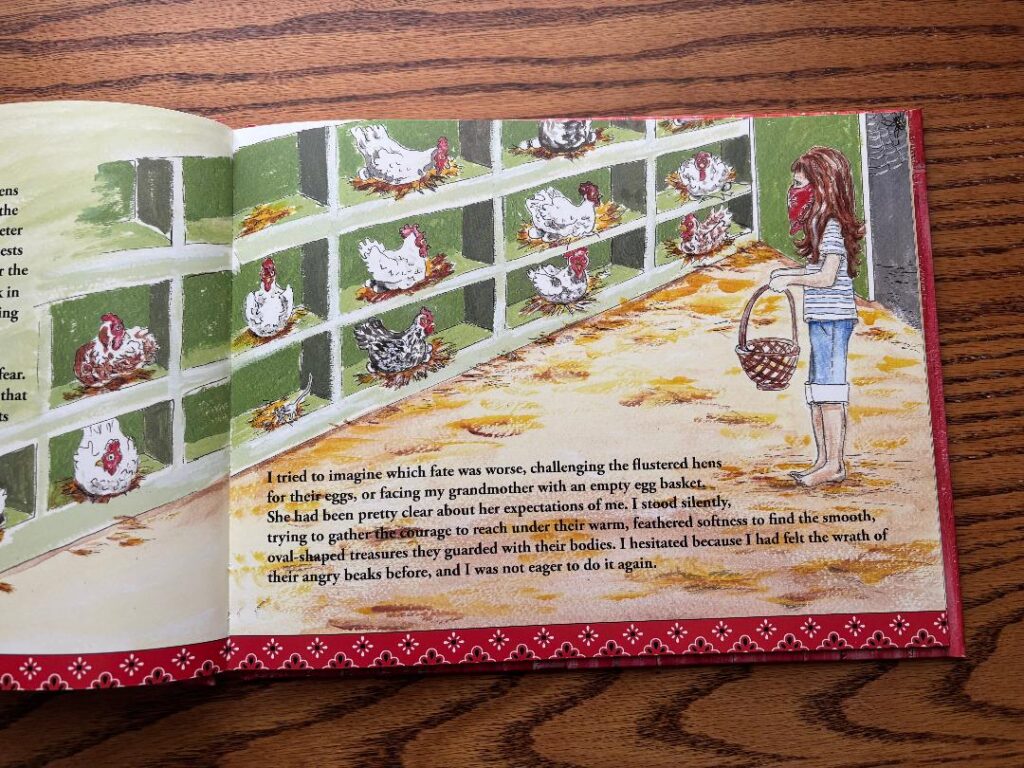
“Which Came First?” is a funny farm story about overcoming fear and being resourceful. It’s also about some funny chickens and a rooster named Pretty Boy. I saw this story illustrated in more whimsical, almost cartoon-like illustrations. Just for fun, Vicki hid a mouse in all the outside pictures for children to find.

The beauty of self-publishing and working directly with your illustrator and graphic designer is that you can have creative input into the look of the book, not just the story. The other part of that is what I call collective brain power where everyone on the team adds good and interesting ideas to make the book better.

From Vicki, I learned that different types of paint and painting styles of the illustrations can give books a unique feel. When we were working on “The Christmas Church” I asked her if she could make the illustrations look like memories. To achieve this, she used watercolor paints for the pictures, and they DO look like memories!

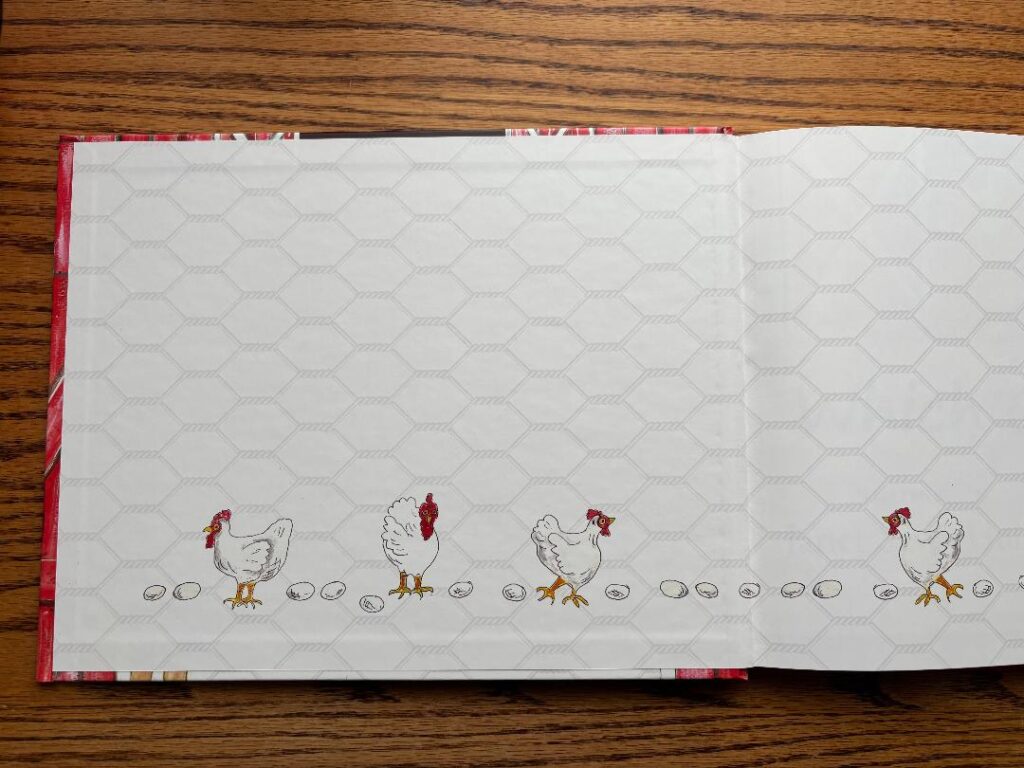
From Crystal, I learned I could have printed end sheets inside the front and back covers of my books. Of course, you pay extra for those in the printing process and that’s why most books don’t have them. I also paid extra for a soft finish on the covers which feels nice to the touch. Some people might not think those things are important but that’s the beauty of self-publishing…you can make your book look and feel the way YOU want.

The downside of self-publishing is you pay all the costs, and you do your own book marketing. It’s difficult to put yourself out there and ask people to buy your books. I’m still learning about book marketing and hope to become better at it in the future. I’ve heard from some of my traditionally published author friends that traditional publishers only help a little with marketing (unless you are very famous) and still expect the authors to do a lot of the book marketing themselves.

I believe that every person potentially has a book inside them. The first step is to get it written. Are you interested in self-publishing? If so, I will address some ways to self-publish in future blog posts.

Posted on 2 Comments

I Threw a Book in the Trash!

I threw one of my books in the trash last week. Yep, you read that correctly. I put it in the trash can with the used coffee grounds and dirty paper plates and old receipts and anything else that we had discarded last week. Anyone who knows me well knows that my books are among my most treasured possessions. Usually, if I buy a book, I will keep it forever.

So, what caused me to do something so out of character?

Before I left Texas a year ago, I bought several books by local authors. I’ve had a dwindling stack of unread books on my nightstand for a while. Recently, I began reading a book from the stack and it seemed to have a pretty good storyline. It was about 300 pages so obviously the author put some time into the project.

Several pages into the book, I noticed a few typos where words were either misspelled or were missing altogether from sentences. After about 50 pages, I was surprised to find more and more typos. When sentences have misspellings or are missing words, I usually must read them a couple of times to try and make sense of them. Finally, after 70 pages, I had had enough. I was so distracted by all the mistakes in the book that I was no longer enjoying the story.

So, into the kitchen trash it went.

This book was by a local author and had been self-published by her publishing company. Obviously, no one proofread it for her or if they did, they did a poor job. I was really disappointed by the book and sorry I wasted my time reading 70 pages of it.

If a person is going to write a book, they owe it to themselves and to their readers to have their book professionally proofread and/or edited. They should have enough respect for their readers to put out a product that is worthy of people’s time and money.

An author can ask an eagled-eyed friend or a retired teacher to look at their manuscript. There are retired teachers who do professional proofreading for a little extra cash. Every community has people who provide writing and editing and proofreading services. You can search for them on Nextdoor. If that isn’t an option, there’s always Fiverr or one of the other inexpensive service websites to go to for help.

This is one of the reasons that self-published books get a bad rap. It’s easier than ever for anyone who thinks they are a writer to publish a book. But there is more to writing a book than publishing a sloppy product. All authors have an obligation to keep the standards high for the work they publish so they can make money from their hard work and so their books don’t get thrown in the trash!

Posted on 3 Comments

Growing Books and Gardens

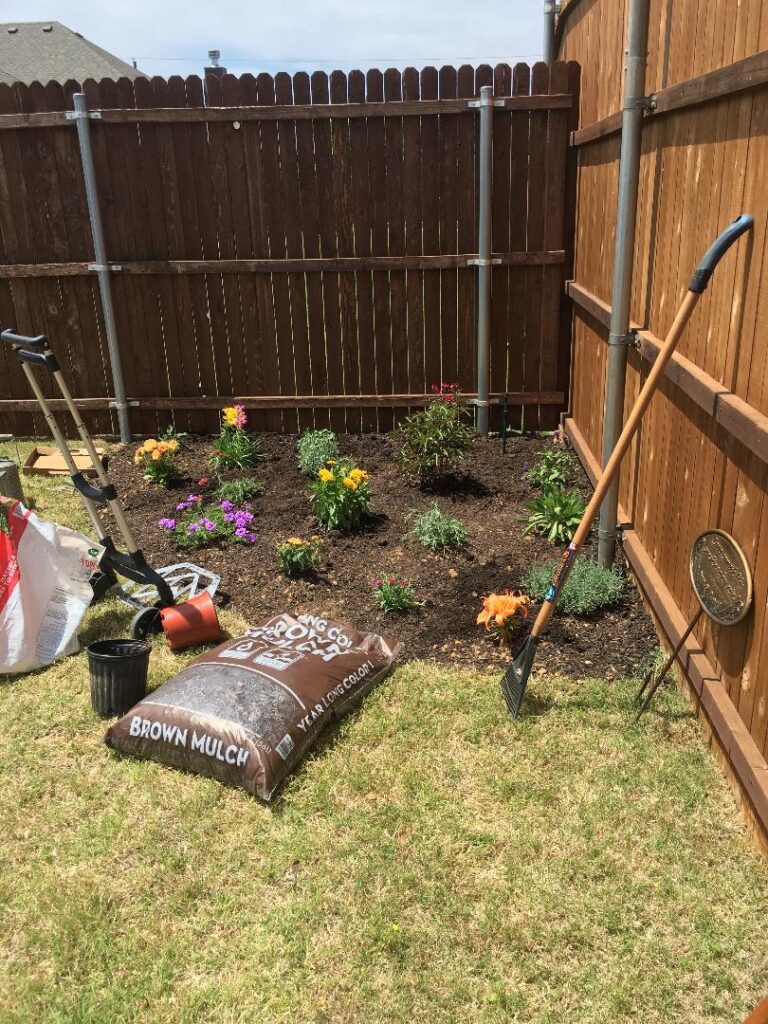
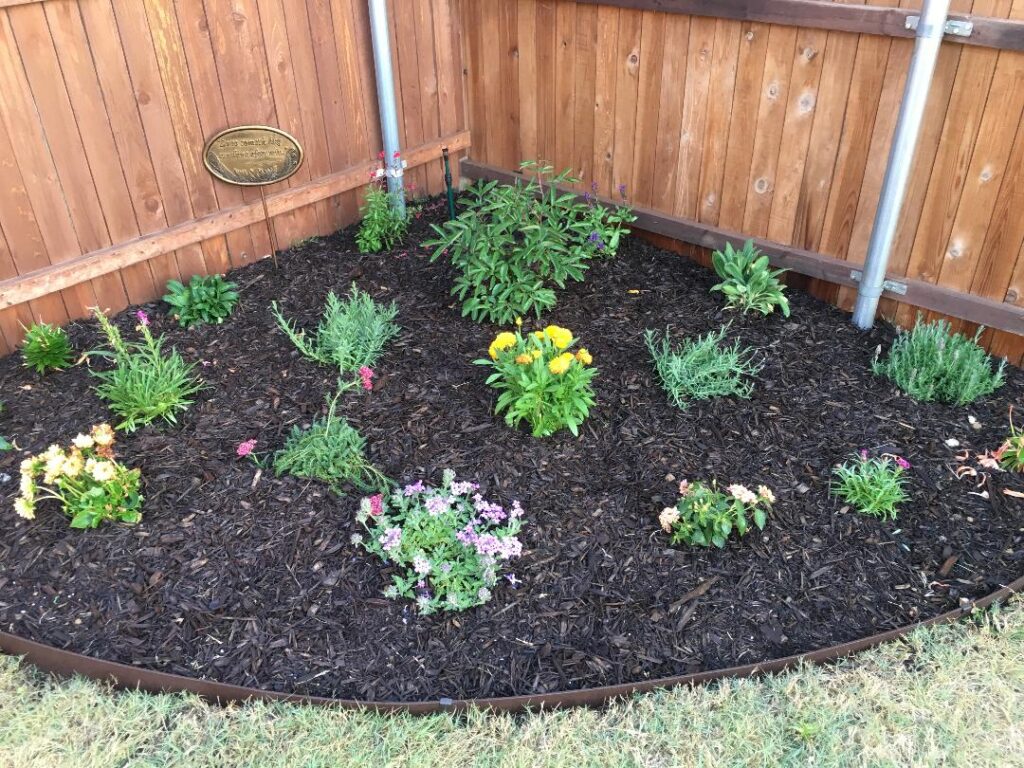
Besides reading and writing books and stories, my other favorite thing to do is gardening. I see gardening and writing books as similar creative endeavors. I often think up story ideas when I’m outside close to nature digging in the dirt.

When I write a new book, I begin with a blank page on my computer. When I create a new garden, I begin with an empty plot of dirt. For me, the challenge of creating something interesting and beautiful out of nothing is incredibly exciting!

Writing involves stringing words together into a coherent story. With so many thousands of words to choose from, it’s no wonder there are so many great books on the market! Gardening is similar. There are so many plants to choose from and so many possible combinations in a garden. I love to go to plant nurseries and look at all the different plants before I decide which ones to buy.

A year ago, when we moved to our new home in Indiana, I was disappointed to find that one of the previous owners had surrounded the house with rocks. I understand the appeal of low maintenance landscaping, but I couldn’t believe that not one space was left open for a garden. Who doesn’t want flowers in their yard?

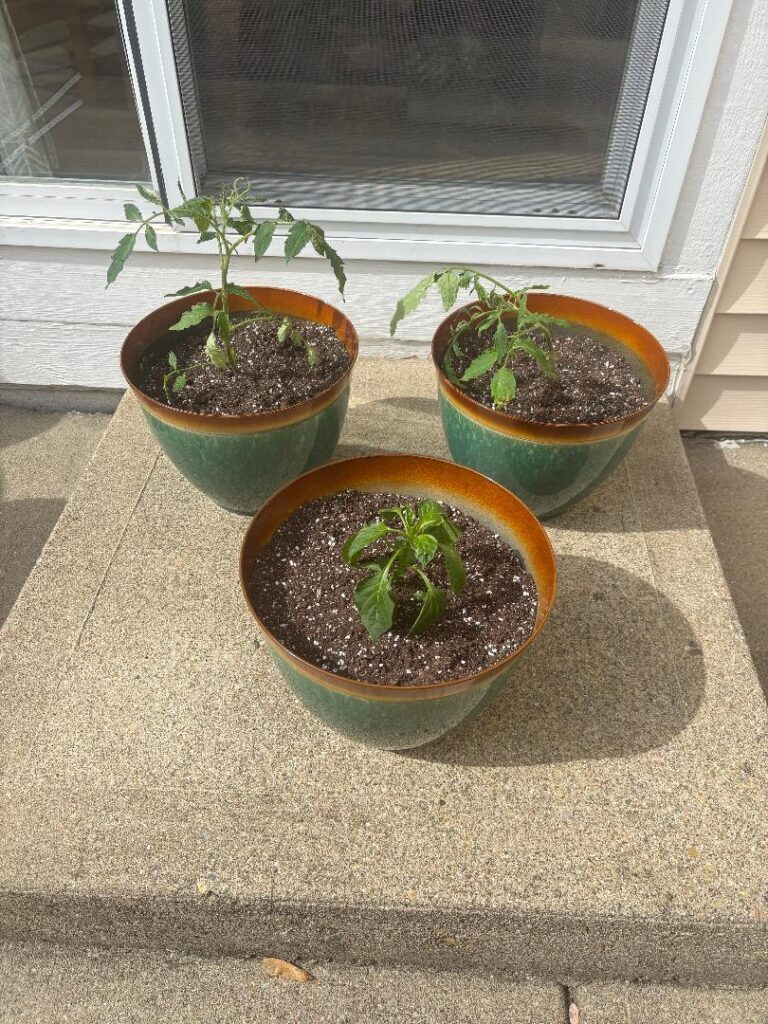
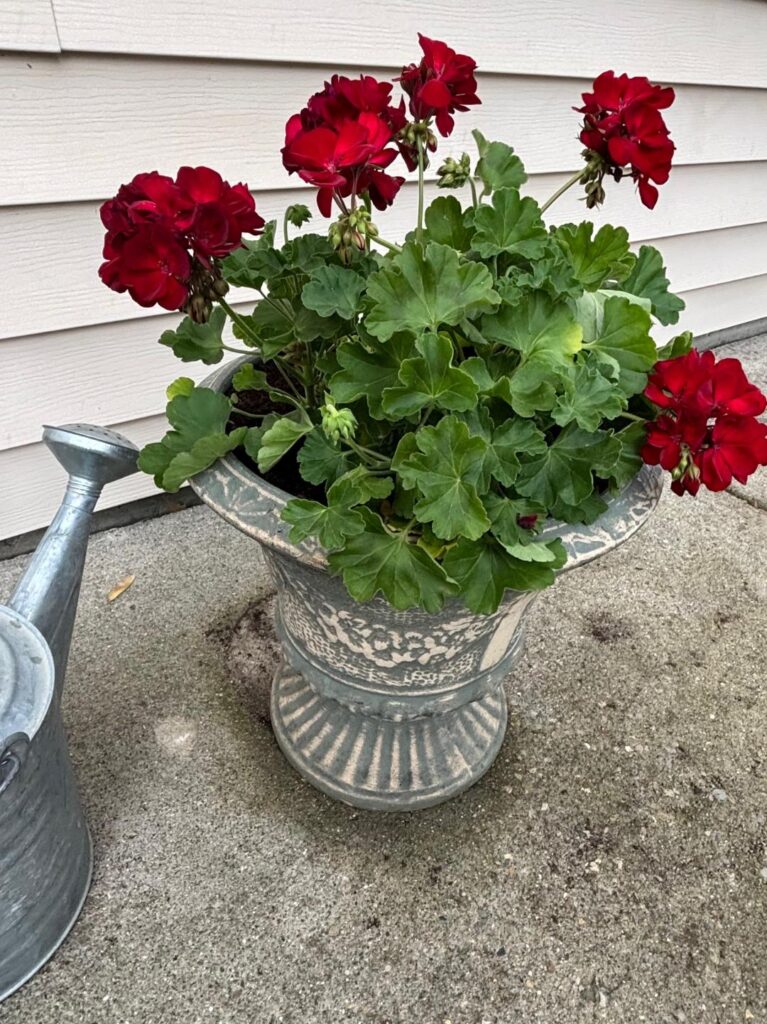
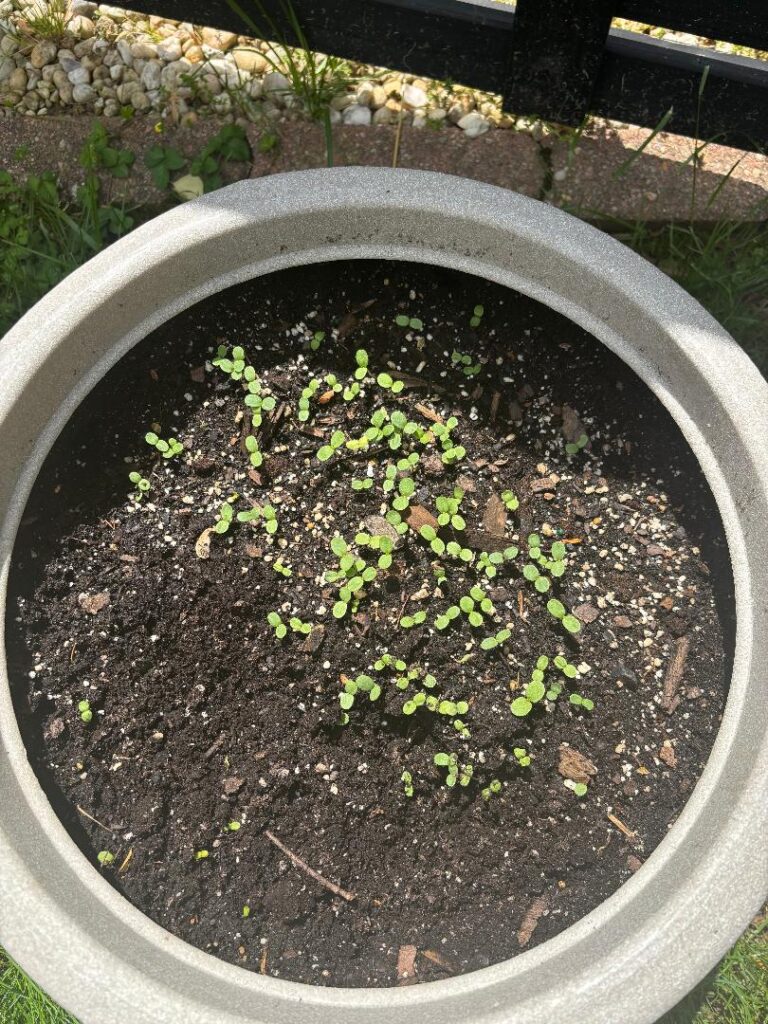
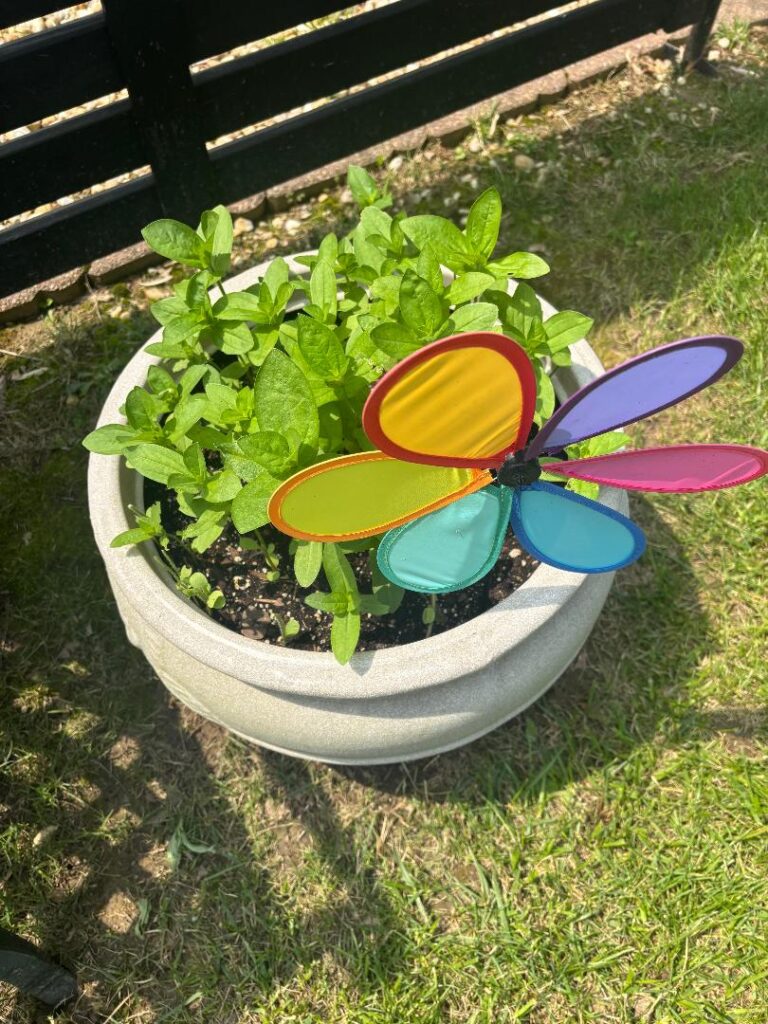
My short-term solution has been to garden in pots…not to be confused with pot gardening! For now, I have geraniums, zinnias and cone flowers growing in pots as well as some tomato and pepper plants. I plan to begin clearing the rocks from a couple of spots in our yard this fall so that I might plant a nice flower garden next spring.

I come from a long line of gardeners in my family. As a child, I used to plant flower seeds with my grandmother and with my mom. They would talk to me about first preparing the soil and then dropping the seeds just so far apart to allow for room for future growth. We would water the flower beds together and watch as they grew from tiny sprouts into stems with buds and then into beautiful flowers.

What a lesson it was in preparation and planning and patience and in the joy of anticipation! In our world of instant gratification, we are forgetting how rewarding it can be to plan for and think about and wait for things to happen.

Both of my grandmothers and my mom loved to be outdoors gardening and tending to their yards. They understood how good it was for the soul to be close to nature. From them both, I learned to love it too. Besides making the space around us more beautiful, gardening is a time for quiet reflection and stress reduction. It’s also been suggested that quieting the mind while gardening can enhance creativity by creating space for new ideas to emerge.

Speaking of nature, something I heard about recently is the concept of “earthing” or “grounding”. Have you heard of it? Earthing is walking barefoot on grass, sand or dirt…basically having direct contact with the earth without any synthetic materials (such as shoes) between us and Mother Earth.

The idea is that earthing reconnects your body to the Earth’s natural electric charge, which is believed to have antioxidant properties. People who believe in the benefits of earthing say it can potentially benefit our health by reducing inflammation, stress, pain, and can also improve sleep. I’ll bet gardening would qualify as earthing. I always feel better after I garden and dig and plant in the dirt. I guess I’ve been earthing for a long time!

Posted on

Voices From The Past

I heard voices from the past this week. Voices of family members who have passed, on a cassette tape. It was both comforting and difficult to listen to them. As the tape rolled, I had to step away and walk outside a few times because I felt myself getting emotional and missing them so much. The people who shaped my young life. The ones I loved with all my heart.

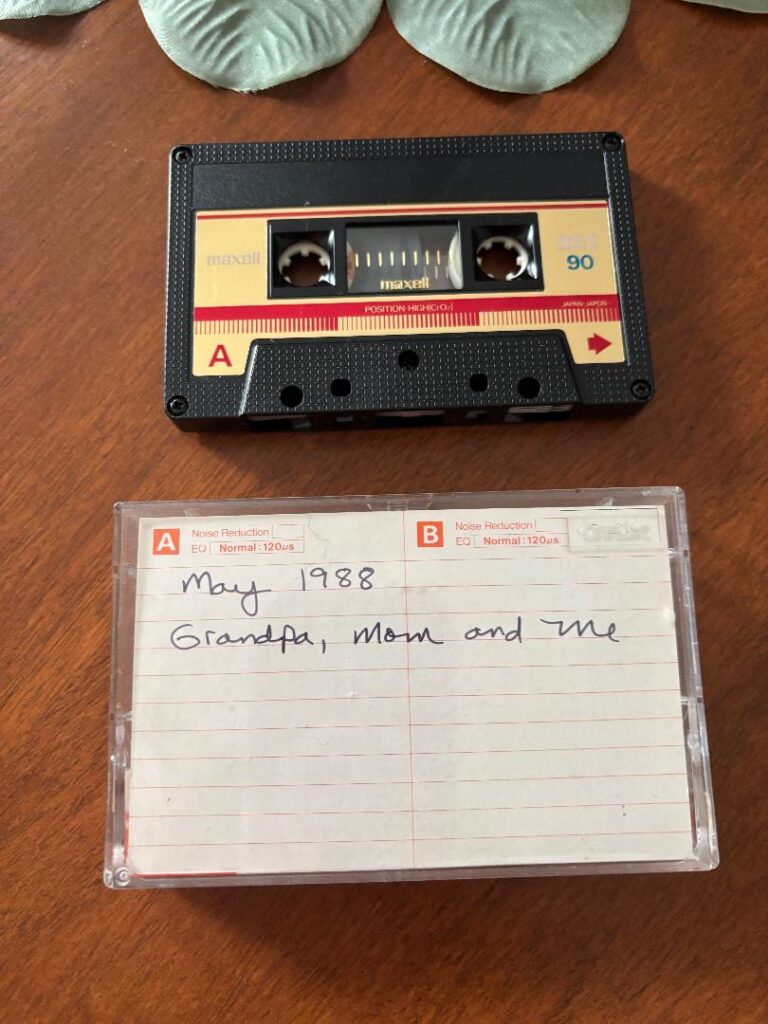
The cassette tape was in a Ziploc bag with a few others that I found last year when I was cleaning out my parents’ house after my mom died. Of course, I laughed when I saw that Mom had saved several cassette tapes. She used to like to record them. Upon closer inspection, I saw that they held conversations with family members. I was only on one tape…well actually, two. I was also on an answering machine tape she had saved where I got to hear my dad’s voice again along with that of my Aunt Edie. On that tape, there was an answering machine message from me to my mom saying I had just called to chat. Boy, did I ever sound young.

As I listened, alone in my sunroom, it felt as if I was transported back to May of 1988 and was sitting at my kitchen table in Kalamazoo, Michigan with my mom and my grandfather. I was 27 years old and a new mom. We were having coffee and talking and laughing. My mom was smoking. I could hear her light cigarettes and take puffs while she talked. I could almost smell her cigarette smoke and see it swirling above our heads at the table.

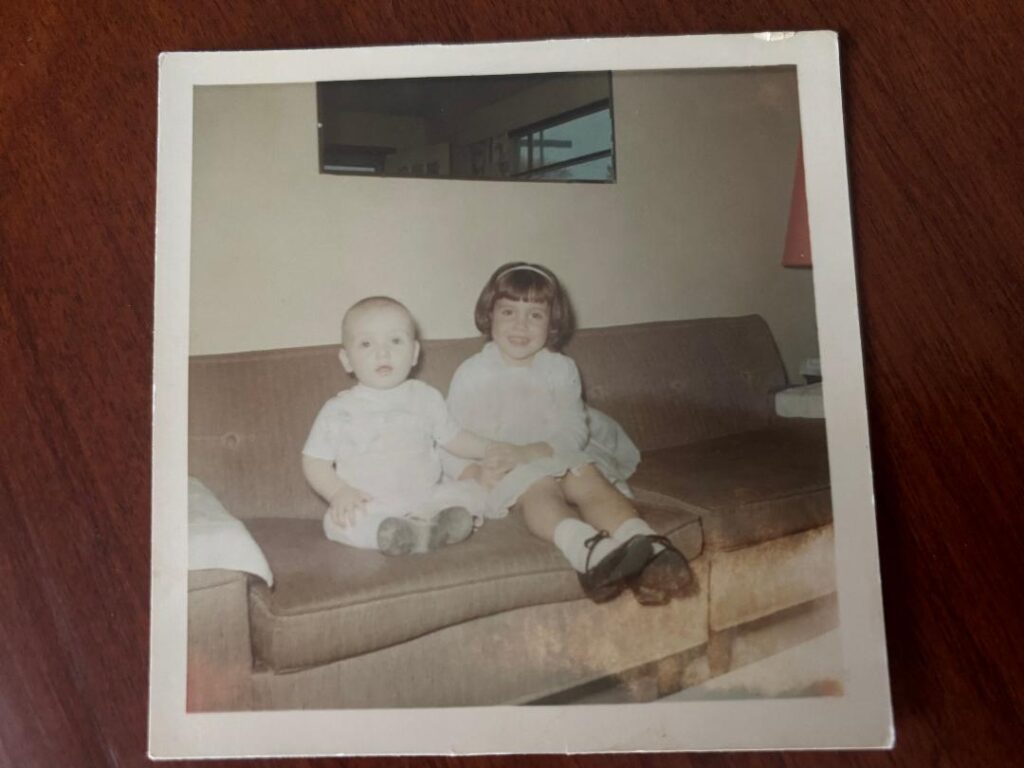
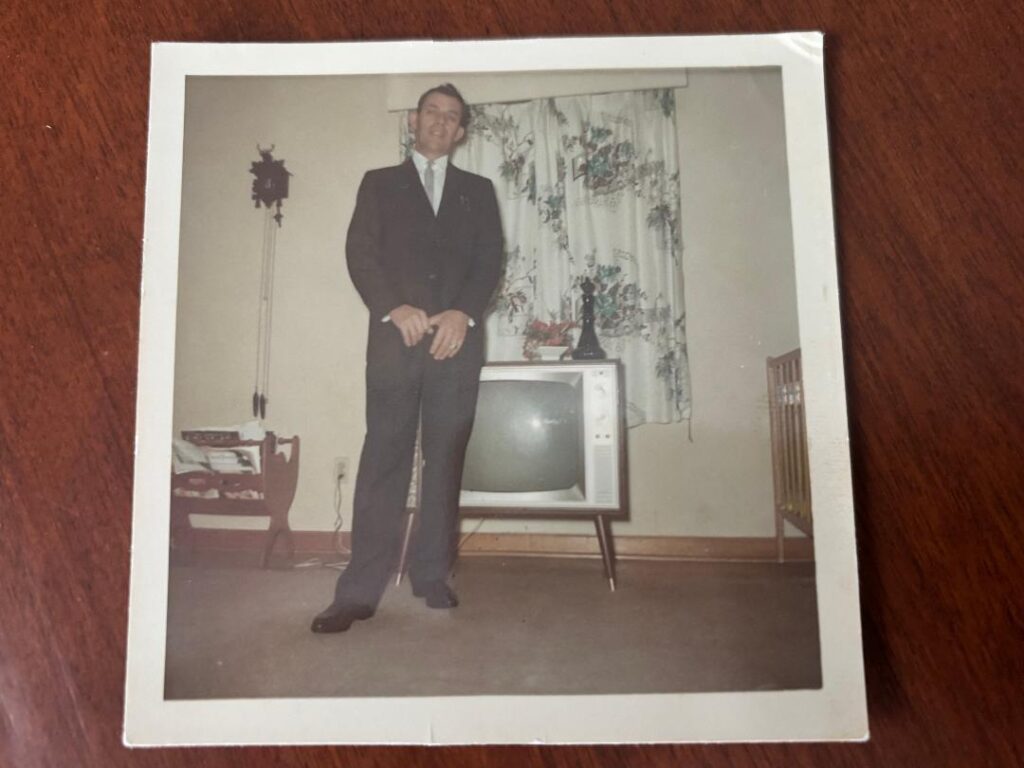
I don’t know why we made the tape. It was long, over an hour. I asked several questions about things from the past so maybe we were just documenting family history for posterity. Since I was a new mom, they told me stories from when I was a baby and a little girl. Apparently, my grandfather had bought us our first color TV back in the mid-1960’s and he said he bought it so I could watch Saturday morning cartoons.  He said he wanted me to be able to watch cartoons in color.  I remember sitting on the living room rug right in front of that TV watching Underdog, The Jetsons, and The Road Runner Show. (For those of you who get the reference, you’ll notice in the picture that there’s an “I Dream of Jeannie” bottle on top of that color TV!)

They also told stories about when my mom was a little girl. She used to go to the barber shop with my grandfather every Saturday. He said, “Saturday was haircut day and there would be a line of men waiting to get their hair cut.” My mom said she used to be so bored waiting, but she wanted to spend the time with her dad. I was surprised that men used to get their hair cut every week!

I asked about my mom’s older sister, Fay, who had died at age four in 1941 after a bout with scarlet fever. The country doctor had given her a blood transfusion without making sure it was the right blood type, and it had killed her. Times have certainly changed. I asked my grandfather if it still made him sad. He said, “If you study about it too much, it gets to you.”

I had forgotten how he had talked until I heard the tape. Studying about it was thinking about it. Trading at the A & P meant shopping at the A & P. That puts me in mind of meant that makes me think of something. He said, Some people can’t hep it which meant some people can’t help it. He grew up on a farm in Tennessee. Maybe it was Southern speak. I was very close to my grandfather and I used to love the way he talked.

They talked about music and about playing old 78 rpm records on a victrola. They talked about listening to the Grand Ole Opry out of Nashville on the radio on Saturday nights. At one point, they got into a discussion about some of their favorite old-time country singers. My grandpa liked Roy Acuff and songs like “Wabash Cannonball” and “The Great Speckled Bird”. They both liked the music of Carl and Pearl Butler from the 1950’s and 1960’s. I wasn’t familiar with the music of the Butler’s so I asked them to sing one of their songs. My Mom began to sing “Don’t Let Me Cross Over” and my grandpa whistled the melody as she sang. It was magical.

And soon after that, they had to head back home an hour away to Elkhart. Our wonderful visit was over, and the tape ended.  Some people and times in our lives were so good that we don’t realize just how good they were until they’re gone. We all have people who are no longer here that we miss. I sat there in the silent sun room with their voices echoing in my head and cried.

Posted on

A Treasure Box

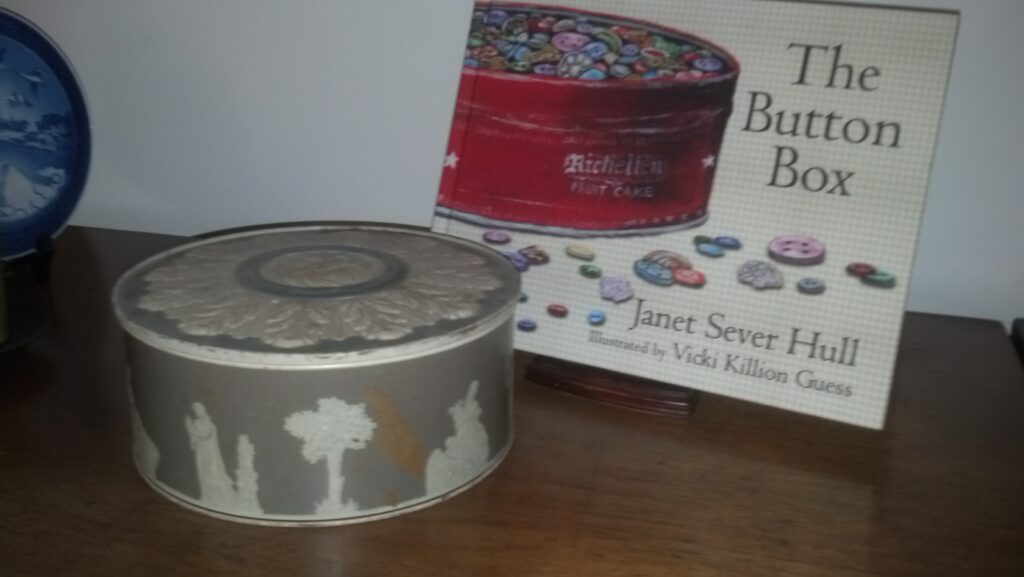
Occasionally, at book signings, someone will come up to my table and see my book and ask, “What is a button box?” Sometimes, I will have my family button box with me and I can show them. It seems that people either had a family button box and know what they are or they’ve never heard of them before.

Years ago, every household had a button box.  In the days before we had a store on every corner, people made their own clothing, and buttons were used over and over on new garments. When old clothing was worn out, the buttons would be removed and placed in the family button box to be reused at another time.  Think of it as an early version of recycling.

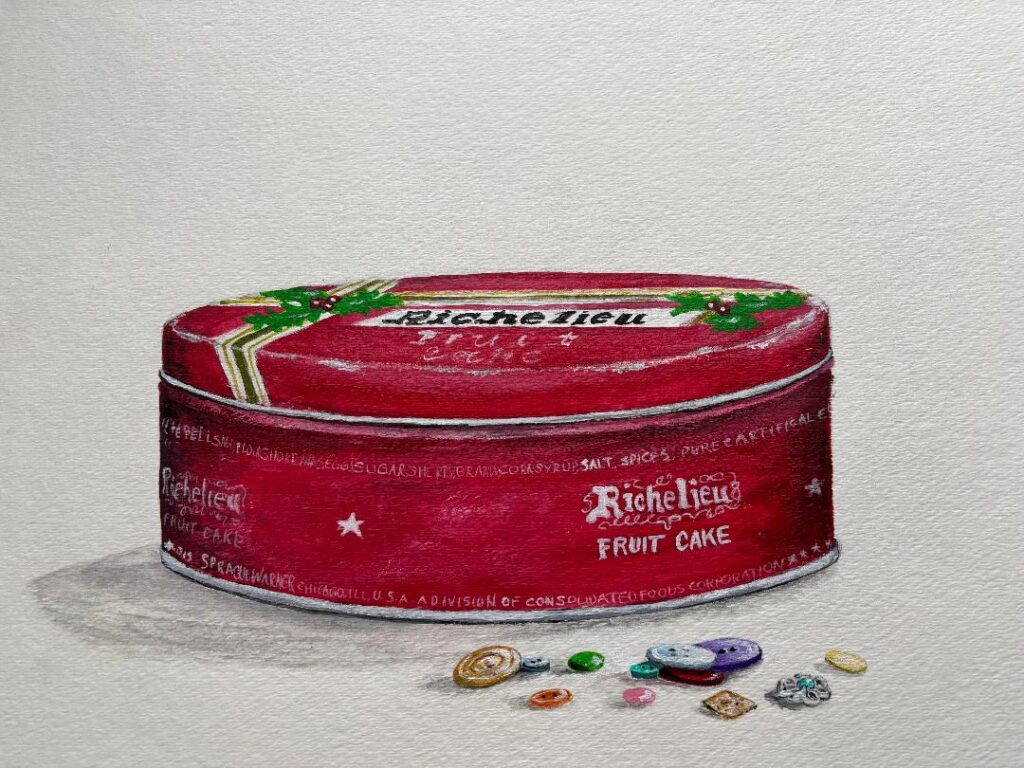
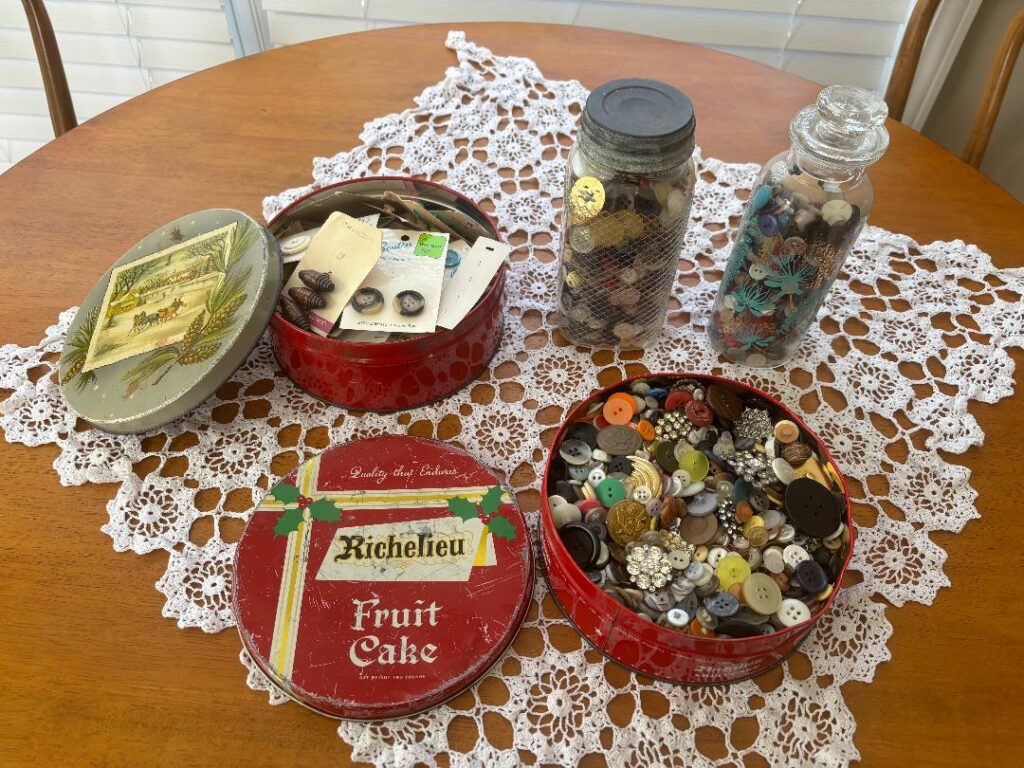
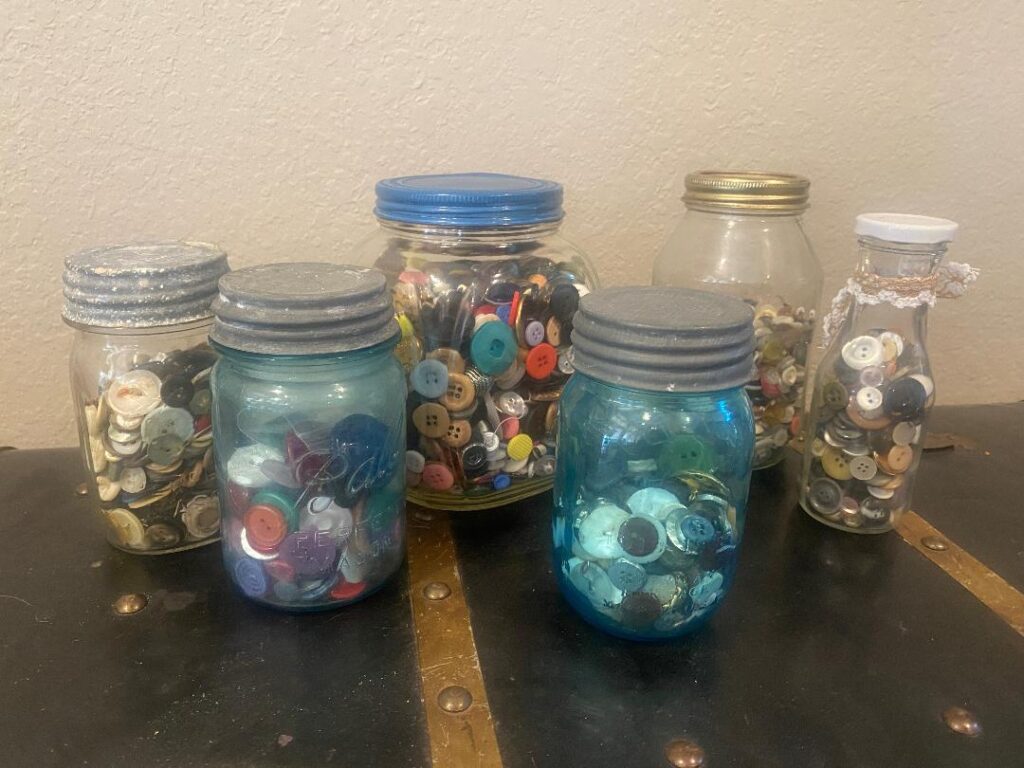
A button box is simply a container for storing your buttons.  People kept their buttons in all sorts of containers, and these were often passed down through the generations.  Many people used tins for their buttons like my family did, but I’ve also heard of a lot of people using glass jars such as Mason or Ball Jars, old cigar boxes, wood boxes, metal boxes, bags, and baskets. 

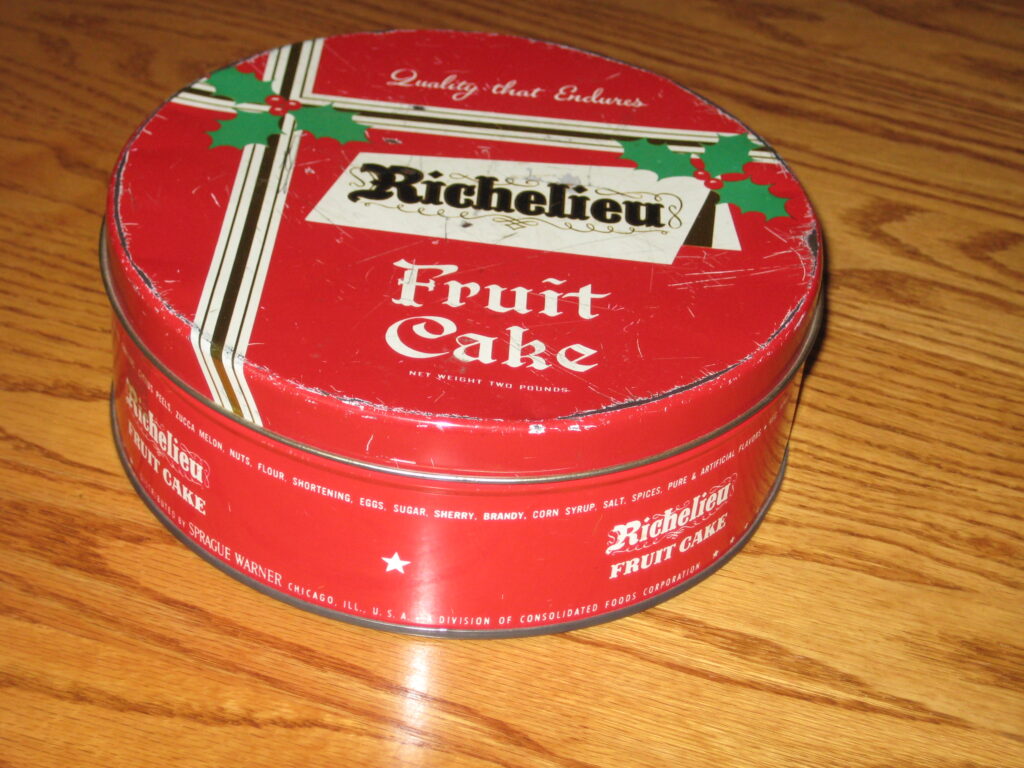
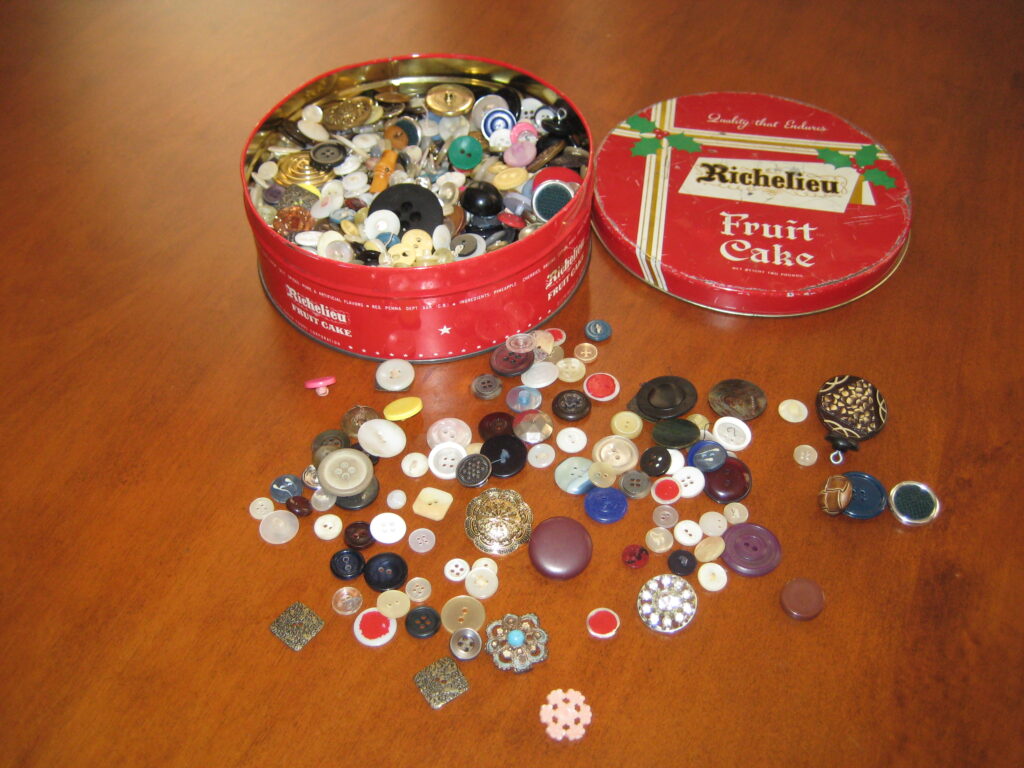
My family’s button box was originally an old fruitcake tin.  “Chicago” is stamped on the bottom of the tin.  This makes sense because my great-grandmother’s family came from Sweden and settled in Chicago. 

Many people have fond memories like I do of going through their family button box with a beloved mother or grandmother.  As I say in my book, my mother and I had a familiar ritual for going through our button box.  We would search for our favorite buttons first, and then we would pick out the familiar ones that had come from our clothing.  Next, we would go through the button box and find other interesting buttons and wonder about the clothing they were on.  To this day, I still love to put my hands in the button box and feel the cool buttons against my warm skin. I guess because it makes me think of those special times with my mom.

Since the publication of my book in 2014, lots of people have shared stories about their family button boxes with me.  After they buy my book, people will often find their family button box and send me pictures. Many of these family boxes held more than just buttons.  A lot of them were jam-packed full of other treasures too! 

In the past, button boxes seemed to be a catch-all for the small trinkets and doodads that people wanted to keep. I’ve been given several button boxes by families who didn’t want theirs and I’ve been delighted by the variety of items stored in them. Besides buttons, some of the things I’ve found in the boxes are keys, barrettes, screws, coins, bullets, keyrings, bits of lace, thimbles, beads, earrings, nails, marbles, sewing needles, matches, dice, rubber bands, chalk, seashells, clothes pins, bobby pins, pictures, Girl Scout pins, rocks and stones, guitar picks, brooches, safety pins, typewriter erasers, diaper pins, locks, buckles, hat pins, paper clips, magnets, small chains, tape measures, wooden spools, watches, chalk, Christmas ornament hooks, hair bows, military patches, medals, and crochet hooks.  All these items would find a home in button boxes, and they would turn into treasure boxes!

In today’s modern world, fabric and hobby stores now sell new containers for buttons and other sewing notions.  However, many people still have and treasure their old family button boxes.

Here’s an exerpt from my book, “The Button Box”:

The button box was filled with hundreds of buttons of every size, shape and color. As a child, I used to wonder where they all came from, and I imagined a lot of people walking around with buttons mising from their clothing. Sometimes my mother would look through the button box to replace missing buttons on our clothes. At those times, I used to worry that the buttons would all be used up, but over the years the button box remained full.

Order your signed copy of “The Button Box” today! https://www.janetseverhull.com/product/the-button-box-signed-copy-17-reviews-copy/

Posted on 1 Comment

Memorial Day is So Much More Than a Cookout

Growing up in Indiana, I was always excited about Memorial Day Weekend.  I didn’t exactly understand what the holiday was about, but I knew that it was finally warm enough for everyone to open their pools and there would be a family cookout where I could see my cousins and other relatives.  And of course, the big race, the Indianapolis 500, would be on TV.

As I grew older, my mother began taking me with her to Rice Cemetery on the Saturday before Memorial Day.  We would rake and clean the winter debris off the graves of family members and plant new flowers or leave an artificial arrangement.   While we worked, I would stop and look out across the very large cemetery and see people tidying the grave sites of their loved ones.  When we finished our tasks, my mother would stand back and say, “I sure do miss them.”

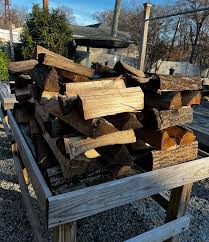
After I became an adult and more family members had passed on, our annual trek involved visits to two cemeteries in my hometown.  My grandmother, my mother’s mother, died in November of 2001.  On the following Memorial Day Weekend, my mother and I went to plant flowers on her grave.  When we got there, we found a big chunk of firewood right in front of her headstone.  (Wish I had a picture of it but that was back in 2002 before we carried cell phone cameras with us everywhere.) My mother fussed, “Now who would put that on someone’s grave” and she promptly threw it into the closest trash can.  Later, at the family cookout, she was complaining to my brother about finding that big piece of firewood on her mother’s grave.

My brother’s face broke into a big smile and said, “I put that there.”  My mother was speechless for a moment before she asked him why in the world, he would do that.  He said, “I always told grandma I would make sure she had firewood for her wood burning fireplace in the winter.  I put that firewood on her grave when the weather turned cold to keep my promise to her.”

While today, we remember all our loved ones who have died, Decoration Day was originally created to remember and honor those who died in military service to our country.  It was renamed “Memorial Day” and declared a federal holiday in 1967, but its origins and customs go all the way back to the American Civil War. 

The Civil War lasted for four years, from 1861 – 1865, and during this time over 600,000 men from both sides were killed in combat.  Women, in the north and in the south, began spontaneously decorating the graves of their husbands, fathers, brothers and sons to honor their ultimate sacrifice to our country and as a way of expressing their grief.

In 1868, General John A. Logan, Commander-in-Chief of the Grand Army of the Republic, declared that “Decoration Day” would be observed every May 30th to commemorate all the soldiers who died in the Civil War.  That first Decoration Day, the graves of both Union and Confederate soldiers at Arlington National Cemetery in Washington D. C. were decorated with flowers and wreaths.  In 1968, Congress changed Memorial Day from May 30th to the last Monday in May so that people might have a three-day holiday weekend. 

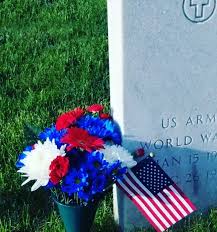
In the United States, flags are placed on the veterans’ graves every year, a few days before Memorial Day. This is done by armies of volunteers from the Boys Scouts and Girl Scouts of America, American Legion, and Veterans of Foreign Wars. Flags are typically placed one foot in front of the headstone and centered.

My parents are buried at the Dallas-Fort Worth National Cemetery because my dad is an Army veteran. A year ago, right before we moved from Texas to Indiana, I visited the cemetery. I was so pleased and proud to see all the flags decorating the graves of the veterans there, including my dad’s!

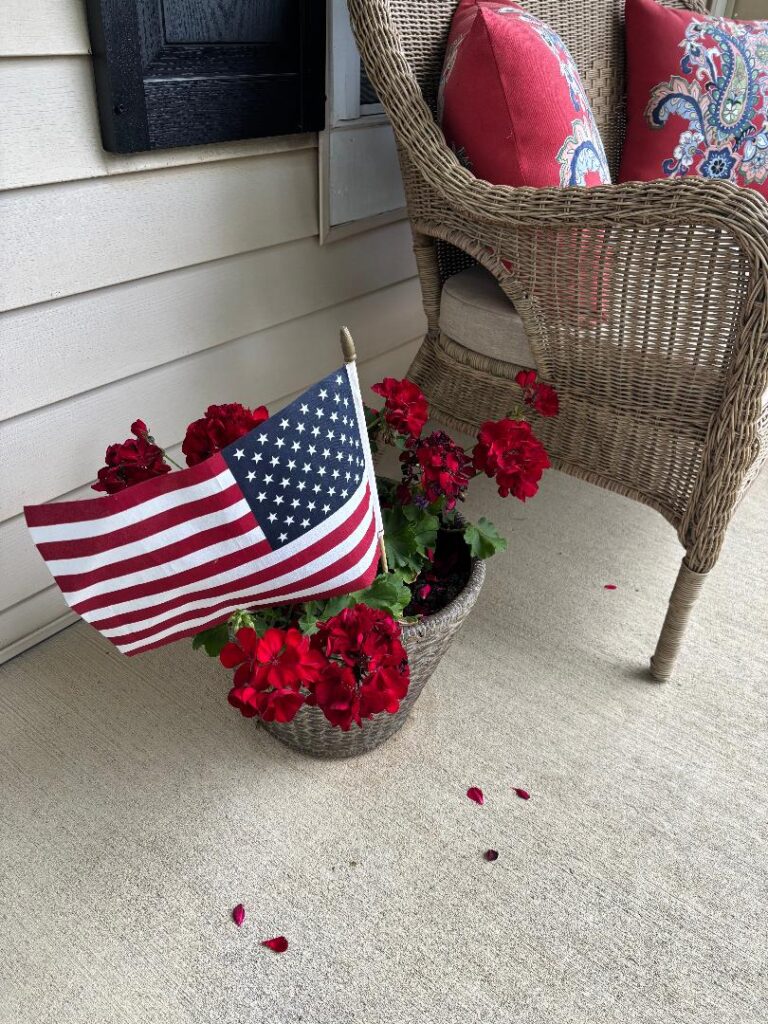
I feel like I’ve come full circle because I moved from Texas back to Indiana a year ago, and it’s almost Memorial Day Weekend. Since I don’t live in my hometown, I won’t be visiting the cemeteries this year. I will, however, put my flag out and remember the people I love who are gone, including my brother, Jeff, who was also an Army veteran and who died way too soon and only four years after he put that piece of firewood on our grandmother’s grave so she would stay warm in the winter.