When my two grandmothers were born in September of 1914 and March of 1920, they both entered a world where women did not have the right to vote. In fact, at that time, women were not allowed to own property in their names and were considered the property of their fathers or husbands.
On August 18th 1920, the 19th amendment to the United States Constitution was ratified by Congress. This amendment gave American women the right to vote. It’s hard to believe that women have only had this right for 105 years.
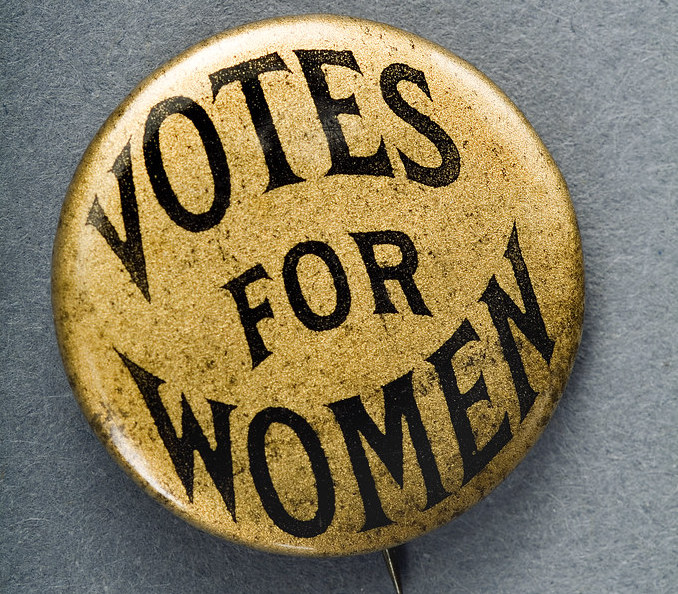
The women’s suffrage (right to vote) movement in the United States began officially with the first women’s rights convention in the world which was held in 1848 in Seneca Falls, New York. The convention was organized by Lucretia Mott and Elizabeth Cady Stanton, who were also both active members of the abolitionist (anti-slavery) movement.
In 1851, Stanton met Susan B. Anthony and the two women formed a life-long friendship and collaboration focused on obtaining voting rights for all women. Once slavery was abolished after the Civil War, the two women founded the “National Woman Suffrage Association” and began campaigning for a constitutional amendment for universal suffrage and for other women’s rights.
Another organization, the “American Woman Suffrage Association” was formed around the same time by Lucy Stone, Julia Ward Howe, and Josephine Ruffin. They focused on trying to win the women’s right to vote state by state.
In 1890, the two organizations merged in order to be more effective. The new organization was called the “National American Women Suffrage Association”. In the early 20th century, the NAWSA held parades and rallies to draw attention to their cause, and allied themselves with local women’s clubs and some labor unions.
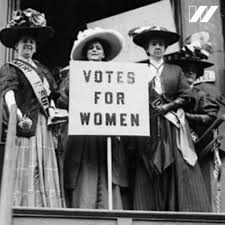
At the time, marching in parades and giving speeches on street corners was considered by many to be “unladylike” behavior and there was a wave of hostility against the suffrage movement by both men and some women. Many women wanted the right to vote and believed in the work of the suffragists, but were too timid or afraid to openly join the effort.
On March 3, 1913, the day before Woodrow Wilson’s presidential inauguration, 8,000 women suffragists marched up Pennsylvania Avenue in Washington D.C. demanding the right to vote. The parade turned into a near riot when the crowds of mostly men surged into the street grabbing, shoving, tripping, and jeering at the participants. Police who were there to protect the marchers, stood back…and in some cases joined in. Photos of men manhandling and dragging women hit newspapers around the world. The events of the day were in the papers for weeks and created an outrage which helped the cause of women’s suffrage.
In 1916, Alice Paul and Lucy Burns organized the National Women’s Party (NWP) and began a more militant campaign for women’s suffrage. The NWP picketed and held demonstrations in front of the White House and all over the country.
Many suffragists were arrested for “obstructing traffic” and thrown in jail where they went on hunger strikes and endured force feedings. Women kept marching and demonstrating and believing in the cause of suffrage for three generations until their efforts finally paid off. The 19th amendment was ratified by a margin of just one single vote in August of 1920.
The 19th Amendment reads:
Section 1. The right of the citizens of the United States to vote shall not be denied or abridged by the United States or by any State on account of sex.
Section 2. Congress shall have power to enforce this article by appropriate legislation.
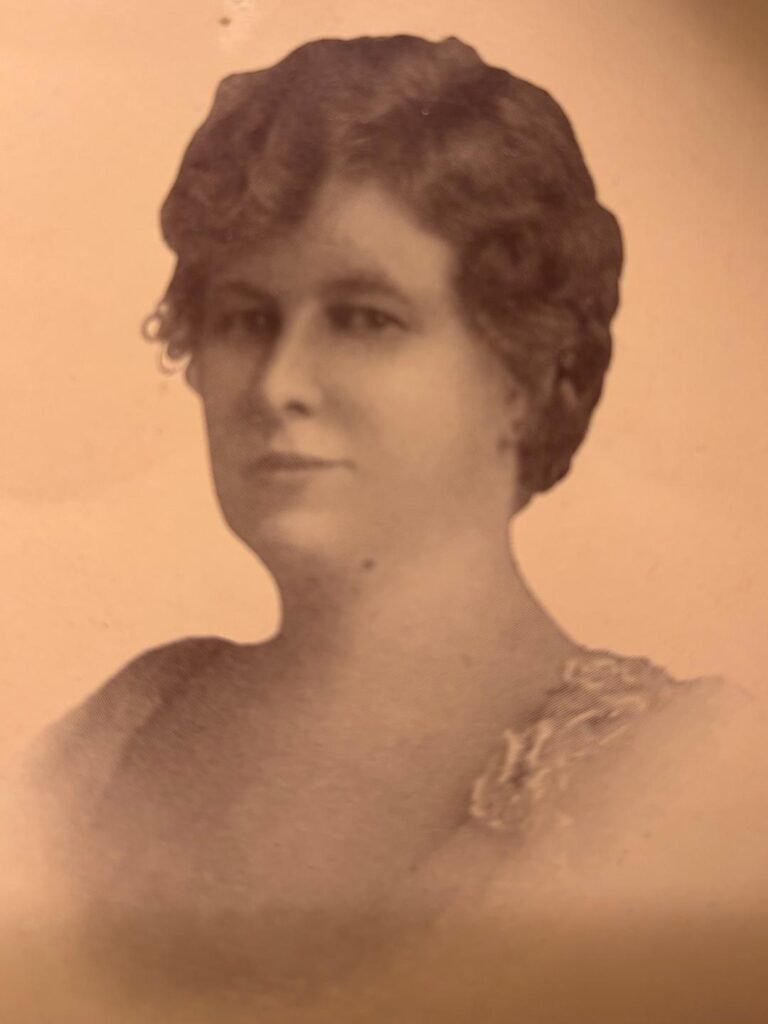
I’m proud to say that I have a family connection to the women’s suffrage movement. My great-grandfather’s sister…who would technically be my great-grandaunt…was a suffragist and according to family stories, hosted women’s suffrage meetings at her home in Elkhart, Indiana during the early 1900’s.
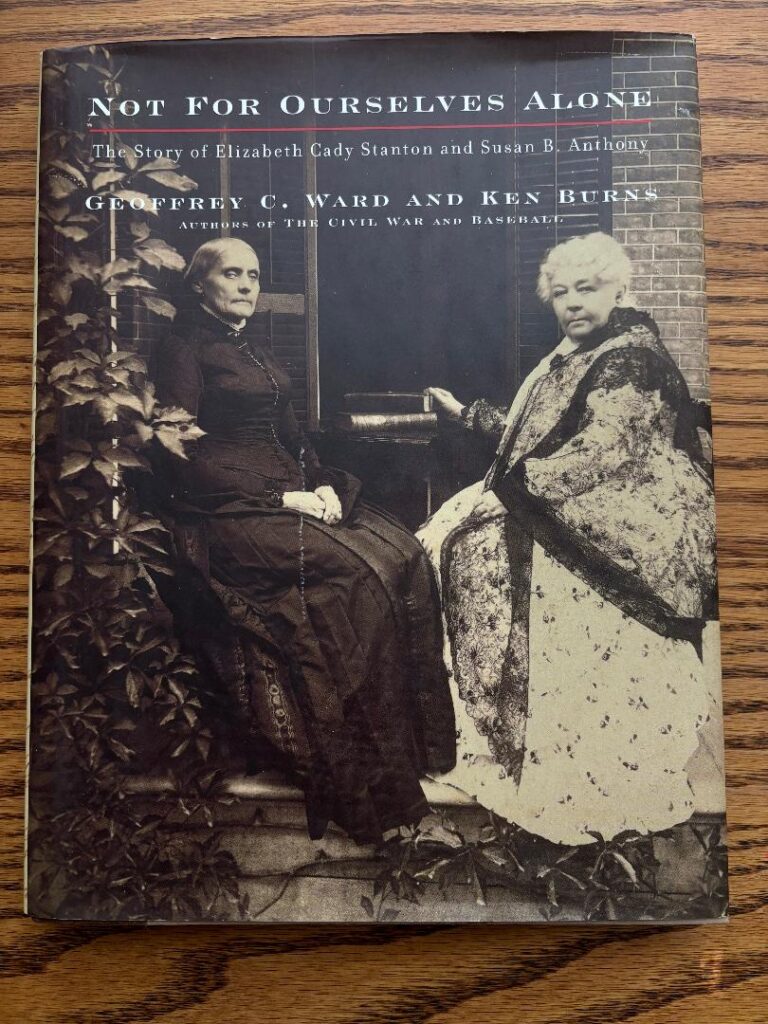
I’ve read a number of books on this subject and it’s horrifying to me what women went through and put up with before they had the right to vote. In my opinion, the best book on this subject is “Not For Ourselves Alone” by Geoffrey C. Ward and Ken Burns. You would think it would be written by a woman, wouldn’t you?
Janet, we,as women, are so grateful to the women that fought for the right for women voting!